Category: Articles

  • One Piece Parents Guide: Is the Long Voyage Kid-Friendly?

    One Piece Parents Guide: Is the Long Voyage Kid-Friendly?

    one piece parents guide answers a question with a twist: the show itself is mostly kid-friendly, but the commitment is enormous. One Piece follows Monkey D. Luffy, a cheerful teenager with rubber powers, and his Straw Hat crew as they sail the Grand Line searching for the legendary treasure called the One Piece. With more than 1,100 episodes and counting, it is the longest-running anime most families will ever consider — and the real parental decision is about time, not just content.

    The Rating: TV-PG to TV-14 Territory

    One Piece sits in TV-PG to TV-14 territory depending on the platform and arc, making it the most family-friendly show in this parents-guide series by a wide margin. The violence is cartoonish: pirates punch, kick and sword-fight, but injuries are rarely graphic and deaths are uncommon on screen. The tone is bright, funny and optimistic, and Luffy’s crew — Zoro, Nami, Usopp, Sanji, Chopper, Robin, Franky, Brook and Jinbe — model loyalty and friendship in a way younger viewers can genuinely admire.

    Violence, Scary Moments and Sad Backstories

    Parents should still know the show’s edges. Fights are constant, and some villains are genuinely frightening in design, especially in the earlier arcs. More importantly, One Piece is famous for its sad backstories: nearly every major character has a tragic past involving loss, slavery or war, and some arcs — including the Marineford war, where major characters die — are emotionally heavy. These moments are handled with care and rarely shown graphically, but sensitive younger children may find them upsetting. There is also mild fanservice in some character designs and costumes, plus drinking and smoking by adult characters, notably Sanji’s cigarette in the original version.

    Language and Other Content

    Language is mild — occasional strong words, far less than most TV-MA anime — and there is very little sexual content. The show’s humor is mostly slapstick and wordplay, and its themes are overwhelmingly positive: freedom, friendship, standing up to tyrants and chasing your dreams. For parents comparing anime, One Piece is closer to a family adventure than to the TV-MA shows in this guide, and its content is the least of your worries.

    The Real Question: The Length

    Here is the honest parental calculation: One Piece has over 1,100 episodes, each around 20 minutes, which means catching up would take months of daily viewing. For younger kids, that scale is actually a plus — the show is episodic enough that you can watch a few episodes at a time without losing the thread, and there is no pressure to finish. For families, the best approach is to treat it as a long-term, low-stakes habit: watch together, enjoy the early East Blue saga, and let your child set the pace. There is no rush to reach the latest arc.

    Where to Start and What to Skip

    The good news is that One Piece starts gently. The East Blue saga, which introduces Luffy and each Straw Hat in turn, is light, funny and easy for younger viewers to follow, and it establishes the crew’s friendships before the story grows darker and more complex. There is no need to skip anything early on, but parents of very young children may want to preview episodes with the show’s scarier villains or its sadder flashbacks, and to save the Marineford war and later arcs for when kids are older. Dubbed and subtitled versions also differ slightly in language and tone, so pick the version your child is most comfortable with.

    The Bottom Line for Parents

    So what does this One Piece parents guide conclude? Cartoon-style violence, sad backstories and heavy war arcs, mild language and fanservice, and a staggering episode count. For children around 8 to 10 and up, with a parent nearby for the sadder arcs, it is one of the most rewarding family watches in anime — and for older kids, it is a rite of passage. If your family wants a shorter pirate adventure first, our Demon Slayer guide covers a much shorter, but far more violent, alternative.

    Still unsure? Watch the first few episodes of One Piece with your child — the tone and violence level are clear from the start.

  • Erased Ending Explained: The Town Where Only I Am Missing’s Final Confrontation

    Erased Ending Explained: The Town Where Only I Am Missing’s Final Confrontation

    ⚠ Spoilers ahead

    Erased anime ending explained: Satoru finally confronts his teacher Yashiro, the serial killer behind the murders, on a frozen bridge, and wakes from a fifteen-year coma to a life his friends rebuilt for him.

    How Satoru Got There

    Satoru Fujinuma, voiced by Shinnosuke Mitsushima as an adult and Tao Tsuchiya as a child, has an ability called Revival: when tragedy strikes, time rewinds and sends him back to fix it. After a final leap back to 1988, he spends the series trying to save Kayo Hinazuki and his other classmates from a child murderer. His first attempts fail, because saving one child is not enough when the killer is still free, and each loop teaches him something new: who to trust, who to protect, and how to change the small moments that lead to tragedy.

    For the full series background, see our complete Erased title page.

    The key breakthrough is trust. Satoru stops trying to carry the burden alone and lets his friends help him: Kenya watches, Sachiko, his mother, believes him, and together they build a safety net around Kayo that the killer cannot quietly cut through. It is this teamwork, not time travel alone, that changes the timeline and forces the killer into the open.

    The Final Confrontation

    In the finale, Satoru works out that the killer is his own teacher, Gaku Yashiro, a man who hid in plain sight as a kind, trusted adult. Yashiro, having worked out Satoru’s secret, traps him on a bridge over a frozen lake and tries to kill him, planning to frame it as a suicide. Satoru refuses to give him the satisfaction of fear, and instead forces Yashiro to admit his crimes aloud, on the record, while his friends listen. The police arrive, Yashiro is arrested, and Satoru, gravely injured, falls into the frozen water and slips into a coma that lasts fifteen years.

    The Fifteen-Year Sleep

    Satoru wakes in 2003, aged twenty-nine, with no memory of the years he lost. The world has moved on without him, and the finale is about what his friends did with the time he bought them. Kayo, who survived because of his intervention, married Hiromi and had a child. Kenya became a lawyer. The people Satoru saved lived full lives, and that is the proof his sacrifice mattered: the future he fought for actually happened, even though he was not awake to see it.

    The Final Scene

    The series closes quietly, not with a battle but with a reunion. Satoru, still rebuilding his memory, meets Airi again, the girl who believed him in the present day and who never stopped believing that he was innocent. Their meeting under the cherry blossoms closes the loop the series opened with: the boy who could rewind time finally stops running backward and starts living forward, in a future he saved but did not get to choose for himself.

    What the Ending Means

    Erased ends with Satoru slowly rebuilding his own life, reconnecting with the friends who waited for him and finding a new beginning with Airi. The final confrontation matters because it is not a fight Satoru wins with strength, but with truth: he makes Yashiro say what he did, and that confession is what finally ends the cycle of Revivals. The town where only he was missing is whole again, not because he erased the past, but because he gave the people he loved a future.

    For another ending where a hero’s sacrifice buys others a future, see our complete Your Lie in April title page.

    For the full series guide, cast and trailer, see our complete Erased title page.

  • Your Lie in April Ending Explained: Kaori’s Letter and the Lie She Told

    Your Lie in April Ending Explained: Kaori’s Letter and the Lie She Told

    ⚠ Spoilers ahead

    Your lie in april ending explained: Kaori dies after her surgery, and her final letter reveals that the lie she told was pretending to love Watari, when she had loved Kousei all along.

    The Final Performance

    Kousei Arima, voiced by Natsuki Hanae, is a piano prodigy who stopped hearing the notes he played after his mother’s death. Kaori Miyazono, voiced by Risa Taneda, is the free-spirited violinist who dragged him back onto the stage, teaching him to play for feeling rather than perfection. In the final episode, titled Spring Wind, Kousei plays at a major competition while Kaori undergoes a risky surgery, and the two performances become one: as he plays, he imagines Kaori beside him, playing her violin, and then he watches her spirit leave the stage, walking away into the light.

    For the full series background, see our complete Your Lie in April title page.

    Kousei finishes the piece in tears, and the audience rises. He has played his best performance, and he has lost the person who made it possible. The episode does not show Kaori’s death on screen. It shows Kousei’s face, and the empty stage, and that is enough.

    Kaori’s Letter

    After the competition, Kousei receives a letter Kaori wrote before her surgery. In it, she confesses the truth she hid all series: she never loved Ryota Watari, the boy she claimed to like. She pretended to love him so she could get close to Kousei, who was Watari’s friend. She had loved Kousei since she was a child, when she saw him play the piano and decided she wanted to play beside him one day. Every lie, every tease, every push was a way of reaching him without admitting how much she needed him.

    The letter also reveals that Kaori knew she was dying. She played through her illness, hiding its severity, because she wanted her last months to be about music, not hospitals. She asks Kousei not to forget her, and tells him that he gave her the courage to keep playing, and that she will always be with him in the music.

    Kousei After Kaori

    The ending’s final images show Kousei beginning to live again. He can hear the piano now, not just play it, and he understands that Kaori’s gift was not a performance but a way of feeling. The cherry blossoms that open and close the series, the spring wind of the finale’s title, frame his grief as part of a cycle: loss is not the end of the music, but the reason it matters. Kousei will keep playing, and every piece he plays from now on will carry Kaori’s influence, the freedom she taught him, the color she brought back to his world.

    The Lie in the Title

    The title’s lie is Kaori’s, but it is also the series’ gift. Kaori lied about Watari, and she lied about being fine, but both lies were told out of love: one to reach Kousei, the other to protect him from grief while she still could. The ending reframes everything that came before. Her cruelty, her demands, her sudden disappearances, all of it was a girl running out of time, trying to give a boy back the music he had lost before she left him.

    What the Ending Means

    Your Lie in April ends not with a cure or a miracle, but with a boy who can finally hear the piano again, because the girl who taught him to feel has left him a letter and a reason to play. Kousei’s final performance is both a goodbye and a beginning: he plays for Kaori, and he plays for himself, and the two are finally the same thing. The lie is forgiven, because it was never really a lie about love. It was love, disguised as one.

    For another ending built on a letter that changes everything, see our complete Cowboy Bebop title page.

    For the full series guide, cast and trailer, see our complete Your Lie in April title page.

  • Jujutsu Kaisen Parents Guide: Curses, Gore and Age Rating Explained

    Jujutsu Kaisen Parents Guide: Curses, Gore and Age Rating Explained

    jujutsu kaisen parents guide starts with a warning about the title’s deceptive friendliness: this is a school-set anime, but it is not a school show. Jujutsu Kaisen follows Yuji Itadori, a kind-hearted teenager who swallows a cursed finger and becomes the vessel for the powerful curse Sukuna, then joins Tokyo Jujutsu High to fight cursed spirits. It is thrilling, funny and stylish — and it is rated TV-MA for good reason. Here is what parents need to know.

    The Rating: TV-MA

    Jujutsu Kaisen is rated TV-MA on US streaming. The rating is driven by violence and disturbing imagery rather than sexual content, of which there is very little. The premise sets the tone: cursed spirits are born from human fear and hatred, they kill people, and the sorcerers who fight them are mostly teenagers. The show’s mentor figure, Satoru Gojo, is famously powerful — but the series is equally famous for not protecting its characters, and major deaths arrive without warning.

    Curses, Gore and Body Horror

    Violence is frequent and graphic. Battles between sorcerers and curses involve blood, broken bodies and dismemberment, and the curses themselves are often grotesque: distorted faces, extra limbs and body-horror transformations, most notoriously Mahito, a curse who reshapes human bodies at will. The Shibuya Incident arc, which closes season two, is the show’s most brutal stretch — a large-scale battle with major character deaths and sustained, intense violence. Younger or sensitive viewers are likely to find both the gore and the horror designs disturbing.

    Language and Dark Themes

    Strong language is present but moderate compared with live-action TV-MA shows. The heavier content is thematic: death is constant, characters grieve friends and mentors, and the story asks hard questions about sacrifice and what a proper death means. There is some smoking and drinking among adult characters. The show’s tone balances humor and horror well, but its emotional punches — particularly in the later arcs — land hard, and parents should expect older teens to be affected by character deaths.

    What About Younger Teens?

    Children under 13 should not watch Jujutsu Kaisen: the gore, body horror and death toll rule it out. For ages 13 to 15, it is a judgment call — most parents’ guides suggest around 14 and up, and only for kids comfortable with graphic animated violence and horror imagery. For 16- and 17-year-olds, it is widely considered appropriate: the show’s themes of loyalty, moral choice and protecting others are strong, and older teens can handle the violence in context. The first episode, with its cursed-spirit attack on a school, is a fair test of the show’s level.

    Why Teens Love It

    None of this makes Jujutsu Kaisen a bad show for older teens — it is one of the most popular anime in the world for a reason. Yuji is a hero whose defining trait is kindness, Gojo is one of anime’s most charismatic mentors, and the fight choreography is spectacular. The show’s questions about what makes a good death and who deserves saving give older teens real things to think about, and its humor keeps the darkness from becoming grim. For the right age group, it is a genuinely rewarding watch.

    The Bottom Line for Parents

    So what does this Jujutsu Kaisen parents guide conclude? TV-MA, frequent bloody battles, grotesque curses and body horror, and heavy themes of death and sacrifice, with little sexual content. It is one of the best action anime of its era — but the school setting does not make it a kids’ show. For a similarly intense anime with a different tone, our Demon Slayer guide covers another TV-MA series parents ask about.

    Still unsure? Watch the first episode of Jujutsu Kaisen with your child — the horror and violence levels are clear from the start.

  • Cowboy Bebop Ending Explained: Spike’s Last Stand and ‘You’re Gonna Carry That Weight’

    Cowboy Bebop Ending Explained: Spike’s Last Stand and ‘You’re Gonna Carry That Weight’

    ⚠ Spoilers ahead

    Cowboy bebop ending explained: Spike finally faces his old enemy Vicious, kills him, and walks out of the syndicate headquarters mortally wounded, collapsing on the stairs as the screen fades and the words You’re gonna carry that weight appear.

    The Past Catches Up

    Spike Spiegel, voiced by Koichi Yamadera, has spent the whole series running from his past. He was once a member of the Red Dragon crime syndicate, in love with Julia, and betrayed by his former partner Vicious. When Julia finally reappears and is killed, Spike has nothing left to run toward and nothing left to lose. He tells his crewmates, Jet, Faye and Ed, that he is going to settle things, and he means it as a goodbye.

    For the full series background, see our complete Cowboy Bebop title page.

    Jet tries to stop him, and Faye begs him not to go, but Spike’s answer is the series’ thesis: he is not going there to die, he is going there to find out if he is really alive. A man who has been living as a ghost, haunted by a past he cannot change, needs to face it to be free of it, whatever the cost.

    The Final Fight

    The finale, The Real Folk Blues Part 2, plays out as a shootout through the syndicate headquarters. Spike fights his way up the building, trading quips and bullets, until he reaches Vicious on the top floor. The two men, once brothers, duel with a gun and a sword, and Spike wins, shooting Vicious dead. But Spike has been shot too, many times, and as he walks down the stairs, leaving the building behind him, he staggers, raises a hand in a final gesture, and collapses.

    The screen does not show him dying on camera. It fades, and the words You’re gonna carry that weight appear, a line from the Beatles song that gives the episode its title. The weight is everything Spike carried: Julia, Vicious, the syndicate, the life he left behind. In the end, he puts it down.

    The Crew Left Behind

    The ending also closes the story of the Bebop itself. Jet, who has been Spike’s partner and the ship’s anchor, is left alone on a ship that has lost its heart, while Faye, who spent the series searching for her own forgotten past, finally understands what it means to belong somewhere, only to lose the place she belonged. Ed and Ein had already left before the finale, chasing their own freedom, and their absence makes the final episodes feel emptier still. The crew that became a family by accident is scattered by choice and by loss, which is why the ending hurts even beyond Spike’s fate.

    Is Spike Dead?

    The series never states it outright, and that ambiguity is deliberate. Spike collapses after taking multiple gunshot wounds, and the final image, a star falling from the sky, strongly implies his death. The creators have since said they intended Spike to die, and the story treats his fall as final: the Bebop crew scatters, Ed and Ein leave, and the ship is left empty. But because the camera cuts away, fans have debated it for decades, and the ending’s power survives either way. Spike’s journey is complete the moment he walks out of that building, because he finally stopped running.

    What the Ending Means

    Cowboy Bebop is a series about people carrying the weight of their pasts, and its ending says that weight cannot be outrun, only faced. Spike’s death, if it is a death, is not a tragedy of defeat but of release: he chose his ending, on his own terms, and he walked out of the darkness into the light. The final line, You’re gonna carry that weight, is both a warning and a comfort. Everyone carries something. The question is whether you let it carry you.

    For another ending where a hero walks knowingly into his final fight, see our complete Code Geass: Lelouch of the Rebellion title page.

    For the full series guide, cast and trailer, see our complete Cowboy Bebop title page.

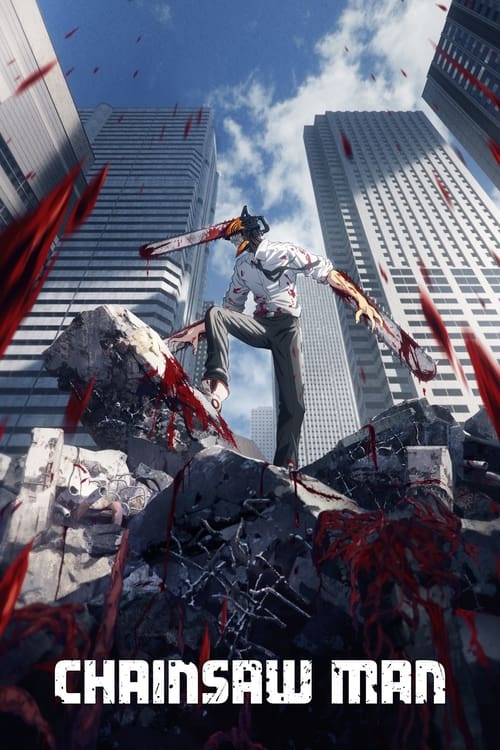
  • Chainsaw Man Parents Guide: Gore Levels and Age Rating Explained

    Chainsaw Man Parents Guide: Gore Levels and Age Rating Explained

    chainsaw man parents guide is one parents should read before the title’s cartoonish name fools them. Chainsaw Man is a MAPPA anime about Denji, a broke teenager who hunts devils to pay off his dead father’s debt, and who gains the power to turn his head and arms into chainsaws. It is funny, weird and surprisingly tender — and it is also one of the goriest anime on streaming. Here is the breakdown.

    The Rating: TV-MA

    Chainsaw Man is rated TV-MA in the US, and the rating covers the whole package: gore, language and sexual content. The show ran for one 12-episode season in 2022, with the story continuing in the Reze Arc film, and its tone is deliberately provocative — it mixes slapstick absurdity with shocking violence, often in the same scene. Parents should not be reassured by the humor: the gore is graphic even when the scene is played for laughs.

    Gore Levels: Extreme and Constant

    Gore is the show’s headline content category. Denji’s chainsaw transformations are exactly what they sound like: heads and limbs become spinning saws, devils are sliced apart, and blood sprays in nearly every fight. Dismemberment, decapitation and bodies torn open are routine, and the show does not cut away — its whole visual style is built on over-the-top, cartoonishly graphic violence. Compared with Demon Slayer, which treats its violence seriously, Chainsaw Man treats gore as a joke and a spectacle, which can make it feel even more extreme. If your child is disturbed by blood and dismemberment, this is a hard no.

    Language, Sexual Content and Crude Humor

    Strong language is frequent, and the humor is deliberately crude: Denji’s motivations are frankly adolescent, and the show includes sexual content, suggestive scenes and nudity, played for comedy. The characters are teenagers and young adults in a workplace of devil hunters — Makima, Aki and Power among them — and the show’s jokes about attraction and bodily functions are constant. There is also drinking and smoking among adult characters. This is the rare anime where parents should weigh the sexual content almost as heavily as the gore.

    What About Younger Teens?

    Children under 14 should not watch Chainsaw Man; the gore and sexual content both rule it out. For ages 14 and 15, most guides advise against it — the combination of extreme violence and crude sexual humor is a lot for that age group, even for teens who handle other violent anime. For 16- and 17-year-olds, it is generally considered appropriate for those comfortable with graphic content: underneath the chaos, the show is a surprisingly emotional story about a poor kid who just wants a normal life, friends and decent food. The first episode is a fair test — it establishes the gore level within minutes.

    The Surprising Heart of the Show

    Parents who only hear about the gore miss what makes Chainsaw Man beloved: Denji is a deeply sympathetic hero, a kid who has never had a normal meal, a real friend or a safe home, and who treasures small kindnesses. His relationships with Aki, Power and Makima — complicated and often painful — give the show an emotional core that older teens genuinely connect with. The gore is the barrier to entry; the heart is why viewers stay, and why it is worth discussing rather than simply banning.

    The Bottom Line for Parents

    So what does this Chainsaw Man parents guide conclude? TV-MA, extreme and constant gore, crude humor, sexual content and strong language. It is inventive, funny and genuinely moving — but it is firmly an older-teen show, and the most extreme of the anime parents guides in this series. For a slightly less extreme starting point, our Demon Slayer guide covers a violent anime with a gentler tone.

    Still unsure? Watch the first episode of Chainsaw Man yourself — the gore and humor levels are clear from the start.

  • Neon Genesis Evangelion Ending Explained: TV Finale vs. The End of Evangelion

    Neon Genesis Evangelion Ending Explained: TV Finale vs. The End of Evangelion

    ⚠ Spoilers ahead

    Evangelion ending explained: the TV finale ends inside Shinji’s mind as he accepts himself, while The End of Evangelion shows the same events from the outside, as Shinji rejects Instrumentality and chooses a painful, separate world.

    Two Endings, One Story

    Neon Genesis Evangelion, created by Hideaki Anno, ran for 26 episodes in 1995 and 1996, and it has two endings that tell the same story from opposite directions. The TV finale, episodes 25 and 26, was made under severe budget and schedule pressure, and it abandons the plot almost entirely to stage Shinji Ikari’s inner life: a series of abstract conversations, memories and congratulations as Shinji, voiced by Megumi Ogata, finally accepts that he is allowed to exist, and that he can like himself.

    For the full series background, see our complete Neon Genesis Evangelion title page.

    The End of Evangelion, the 1997 film, retells the ending as a physical apocalypse. SEELE launches its plan, NERV is attacked, Asuka fights the mass-production Evangelions, and Shinji, broken by loss, triggers Third Impact, merging all human souls into a single consciousness. Both endings are about the same choice: whether Shinji will accept a world where other people can hurt him, or retreat into a world where no one can.

    The TV Finale: Congratulations

    In the TV ending, Shinji’s journey is psychological. He confronts the voices of the people around him, Misato, Rei, Asuka, his father Gendo, and hears them say the things he has always feared and always needed to hear: that he is not worthless, that his existence is not a burden, that he can choose how to see himself. The final scene is famously simple: Shinji smiles, and the cast applauds him, saying congratulations. There is no battle, no resolution of the Angel war, only a boy deciding that he is allowed to live.

    The TV finale also reframes the whole series in hindsight. The Angels, the Evangelions and NERV were never really the point. They were the pressure that forced a lonely teenager to ask whether he deserved to exist at all, and the finale answers that question directly, without monsters or explosions, by letting Shinji answer it for himself.

    The End of Evangelion: I Need You

    The film gives the same choice a body. In Third Impact, humanity dissolves into orange liquid, the LCL sea, and Shinji floats in a world without boundaries, without loneliness, without pain. And he rejects it. He realizes that a world without others is also a world without himself, and he chooses to return to a separate, painful existence, where people can hurt each other and also love each other. The final scene on the beach is stark and strange: Shinji and Asuka, the only two returned souls shown, lying on the sand. Asuka’s last line, a quiet, dismissive remark, is the film’s proof that separation has returned, and with it, the possibility of real connection.

    The film also closes the arcs of the adults around Shinji. Gendo, who used his son as a tool to reunite with his dead wife Yui, finally faces what he did and accepts his own death, while Rei, who was never quite human, merges with Lilith and becomes the vast, serene figure who carries out Instrumentality itself. Their endings mirror Shinji’s: every character must decide whether to hide from other people or face them.

    For the film version’s own page, see our complete The End of Evangelion title page.

    Which Ending Is Real?

    Both. Anno has always treated the two endings as complementary, not competing. The TV finale shows what happens inside Shinji when he makes his choice. The film shows what happens outside him when he makes it. One is the mind, the other is the world, and together they form the complete ending: Shinji accepts himself, and then he accepts other people, with all the pain that brings. That is why Evangelion’s ending still divides fans and still matters: it does not end with a victory, but with a decision to keep living.

    For the full series guide, cast and trailer, see our complete Neon Genesis Evangelion title page.

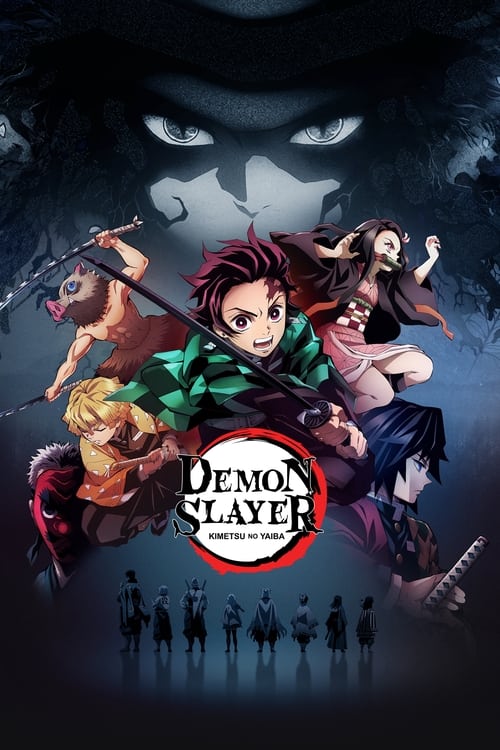
  • Demon Slayer Parents Guide: How Violent Is It, Really? A Guide for Families

    Demon Slayer Parents Guide: How Violent Is It, Really? A Guide for Families

    demon slayer parents guide answers the question every parent asks when their child discovers Tanjiro: this looks like a cartoon, so how violent can it be? The answer is: very. Demon Slayer is one of the most beautiful anime ever made — and one of the bloodiest. Here is how violent it really is, and which ages it suits.

    The Rating: TV-MA in the US

    Demon Slayer is rated TV-MA on US streaming, and the rating is earned in the first episode. The premise is dark from the start: Tanjiro Kamado returns home to find his family slaughtered by demons, and his sister Nezuko has been turned into one herself. He joins the Demon Slayer Corps to find a cure for her and avenge his family. The show follows Tanjiro, Zenitsu and Inosuke through increasingly brutal battles, and the violence never softens — later arcs, including the Mugen Train story and the Infinity Castle films, are more intense, not less.

    How Violent Is It, Really?

    Very violent, and in a specific way parents should understand. Demon-slaying in this world means beheading: demons can only be killed by decapitation with a special sword, so nearly every major fight ends with a severed head, shown in graphic detail, with blood. Demons also eat humans, and the show depicts their attacks — including on children and families — as well as the slayers’ injuries. The animation is gorgeous, which makes the violence more striking rather than less: blood sprays in stylized arcs, and battles are long and brutal. This is not cartoon slapstick violence; it is presented as lethal combat with real consequences.

    Language, Scary Content and Emotional Weight

    Language is moderate — some strong language, less than most live-action TV-MA shows — and there is very little sexual content, which is one reason parents sometimes assume the show is milder than it is. The harder content is emotional: grief, loss and death are constant, major characters die, and several arcs hinge on tragic backstories, including demons who were once victims themselves. The demons’ designs can also be frightening for younger children, with grotesque transformations and body horror. For sensitive kids, the sadness hits as hard as the sword fights.

    What About Younger Teens?

    Children under 12 should not watch Demon Slayer: the opening family massacre and the beheadings rule it out. For ages 12 to 14, it depends on the child — most parents’ guides suggest mid-teens, around 14 and up, and only for kids comfortable with graphic animated violence. For 15- to 17-year-olds, it is widely considered appropriate: the show’s themes of loyalty, kindness and perseverance are genuinely positive, and older teens can handle the violence in context. The key test is the first episode: if the opening scenes are too much, the rest of the series will be too.

    Why Kids Love It Anyway

    None of this means Demon Slayer is a bad show for teens — quite the opposite. Kids love it because Tanjiro is kind in a world that is cruel, because the animation is genuinely spectacular, and because the friendships between Tanjiro, Zenitsu, Inosuke and Nezuko feel real. Parents who watch with an older teen will see why it became a global phenomenon: it is a story about compassion winning out over cruelty, told with extraordinary craft. The question is never whether it is good — it is whether your child is ready for its violence.

    The Bottom Line for Parents

    So what does this Demon Slayer parents guide conclude? TV-MA, frequent bloody sword combat and beheadings, frightening demon designs and heavy emotional themes, with little sexual content or language. It is one of the best anime of its generation — but it is not a kids’ show, whatever the animation style suggests. For another TV-MA anime parents ask about, our Jujutsu Kaisen guide covers a series with a similar intensity level.

    Still unsure? Watch the first episode of Demon Slayer with your child — the violence level is clear from the start.

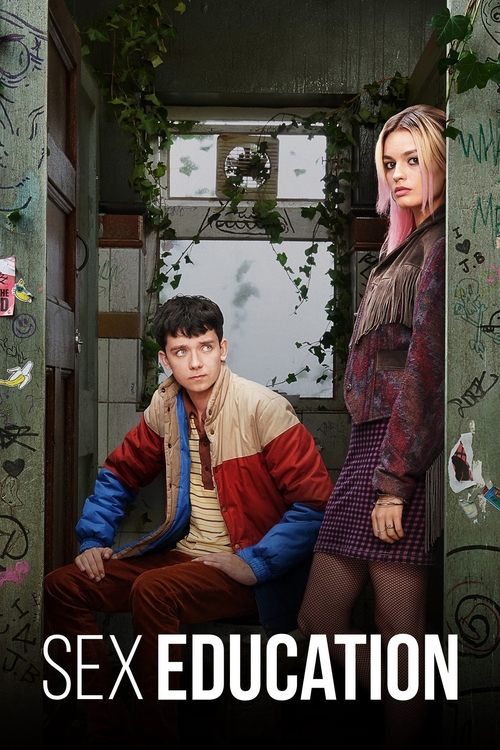
  • Sex Education Parents Guide: What’s Actually in It and For Which Ages

    Sex Education Parents Guide: What’s Actually in It and For Which Ages

    sex education parents guide is a search parents make for good reason: the title alone raises questions, and the show is frank about its subject. Sex Education is a British Netflix comedy-drama, created by Laurie Nunn, about Otis Milburn, a teenager whose mother Jean is a sex therapist, and who starts giving his classmates informal advice. Here is what is actually in it, category by category, so you can judge the right age.

    The Rating: TV-MA, and Why

    Netflix rates Sex Education TV-MA. The rating is driven by sexual content, not violence — there is almost no violence in the show, and its tone is warm, funny and genuinely kind. The central joke is that Otis, played by Asa Butterfield, knows the theory of sex from his mother’s work but has almost no experience of his own, while his best friend Eric (Ncuti Gatwa) and Maeve (Emma Mackey) push him toward real relationships. The show ran for four seasons and 32 episodes, and its frankness is consistent throughout.

    Sexual Content: Frequent, but Not Graphic for Its Own Sake

    This is the category that decides the age question. Sex Education contains frequent sexual discussion — the characters talk about sex constantly, because that is the premise — along with nudity and sexual scenes. The scenes are generally handled in a matter-of-fact, non-exploitative way, and the show’s point is almost always educational: consent, communication, safety and respect are recurring themes, and the adults, especially Gillian Anderson’s Jean, model honest conversation. Even so, the sheer frequency of the content makes it unsuitable for younger viewers, and parents should expect their teen to see nudity and sexual situations if they watch.

    Language and Mature Themes

    Strong language is frequent, in line with a British school-set drama. Beyond that, the show tackles mature themes head-on: identity and coming out, first relationships, peer pressure, and an abortion storyline in season one that is treated seriously and without sensationalism. Alcohol and partying appear at school social events, and there is occasional drug use among the older teens. Bullying appears too, though it is usually called out by the story rather than endorsed. None of this is presented as shocking for its own sake — the show’s reputation rests on treating its characters with unusual empathy.

    What About Younger Teens?

    Children under 14 should not watch Sex Education; the sexual content alone puts it out of reach. For ages 14 and 15, it is a judgment call: some parents watch alongside their teen and use the show’s own conversations — about consent, pressure and honesty — as a starting point for their own. For 16- and 17-year-olds, it is generally the most appropriate audience: old enough to understand the jokes and the issues, and likely to benefit from the show’s unusually healthy framing of relationships. Independent guides generally land around 16+.

    A Note on Watching Together

    If your teen is already asking about Sex Education, watching the first episode together answers most questions faster than any guide. You will see the tone immediately: funny, frank and far gentler than the title suggests, with the school’s students treated as people rather than punchlines. Watching together also gives you a natural opening for the conversations the show itself encourages — about consent, honesty and the difference between what characters do on screen and what healthy relationships look like in real life.

    The Bottom Line for Parents

    So what does this Sex Education parents guide conclude? TV-MA, frequent sexual content and nudity, strong language, and mature themes handled with rare warmth and honesty. It is not a show to leave running unattended for a younger teen, but for an older teen — ideally with a parent willing to talk about it — it is one of the more responsible depictions of teenage relationships on television. If you want a gentler starting point in the same genre, our Wednesday guide covers a teen series with far less sexual content.

    Still unsure? Watch the first episode of Sex Education yourself — its tone and content level are clear within the opening scenes.

  • Steins;Gate Ending Explained: The Steins Gate Worldline and Every Timeline, Mapped

    Steins;Gate Ending Explained: The Steins Gate Worldline and Every Timeline, Mapped

    ⚠ Spoilers ahead

    Steins gate ending explained: Okabe saves both Kurisu and Mayuri by reaching the Steins Gate worldline, a third path between the Alpha and Beta worldlines, where neither of them has to die.

    Alpha and Beta: Two Ways to Lose

    Rintaro Okabe, voiced by Mamoru Miyano, is a self-proclaimed mad scientist whose phone microwave can send messages to the past. Every message he sends shifts the world onto a new worldline, and every shift has a cost. In the Alpha worldline, the one he starts in, Mayuri, voiced by Kana Hanazawa, dies again and again, no matter how many times Okabe tries to save her, because her death is a convergence point, a fixed event that fate keeps restoring.

    For the full series background, see our complete Steins;Gate title page.

    To escape Alpha, Okabe must undo every message he ever sent, one by one, reliving the pain each message caused. When he finally returns to the Beta worldline, the original timeline, he finds a worse outcome waiting: Kurisu Makise, voiced by Asami Imai, is dead, killed in a confrontation with her father in the radio building, and her death is what leads to a dystopian future ruled by SERN. Alpha costs Mayuri’s life. Beta costs Kurisu’s. Both futures end in ruin.

    The Third Path: Steins Gate

    The solution comes from a video message Okabe sends to himself from the future, recorded after he has already lived through both failures. Future Okabe tells his past self that there is a third worldline, Steins Gate, lying between Alpha and Beta, where neither Mayuri nor Kurisu dies, and where SERN never rises to power. Reaching it requires something Okabe believes is impossible: he must save Kurisu without changing the event that the world needs to see.

    The trick is deception, not force. Okabe must make Kurisu’s father believe she is dead, so that the timeline converges the way history demands, while keeping her alive in secret. He stabs her himself, with a fake blood pack, stages her death, and lets her father walk away believing he has killed her. The world sees a dead Kurisu, so the convergence holds, but Kurisu herself survives, hidden. It is the only move that satisfies both the rules of time travel and the people Okabe loves.

    The Final Scene

    The series ends with Okabe arriving on the Steins Gate worldline, where he meets Kurisu again on the street, alive, in a world that has never known the dystopia he fought to prevent. Their final exchange, her teasing him about the mad scientist persona he can finally put down, closes a story that began with a murder he witnessed and ends with a life he refused to give up. The last episode, titled Achievement Point, aired in 2011, and its closing image is deliberately quiet: two people, a city street, and a future that is finally unwritten.

    What the Ending Means

    Steins;Gate’s ending works because it refuses the easy choice. Okabe does not pick Mayuri over Kurisu, or Kurisu over Mayuri. He finds a third answer by understanding the rules better than anyone else, and by accepting that saving someone can mean letting the world believe they are lost. The Steins Gate worldline is not a cheat. It is the reward for a character who spent the whole series learning that every action has a price, and who finally pays it in full.

    For another ending built on an impossible choice between two people, see our complete Code Geass: Lelouch of the Rebellion title page.

    For the full series guide, cast and trailer, see our complete Steins;Gate title page.