Evangelion has one of the most argued-over watch orders in anime, because the story exists in two forms that both claim to be the ending — and then a third form that retells the whole thing. The good news is that the path through it is actually simple, as long as you know which version is which. This guide gives you the definitive Evangelion watch order, from the original series through End of Evangelion to the Rebuild films.
Step One: The Original Series
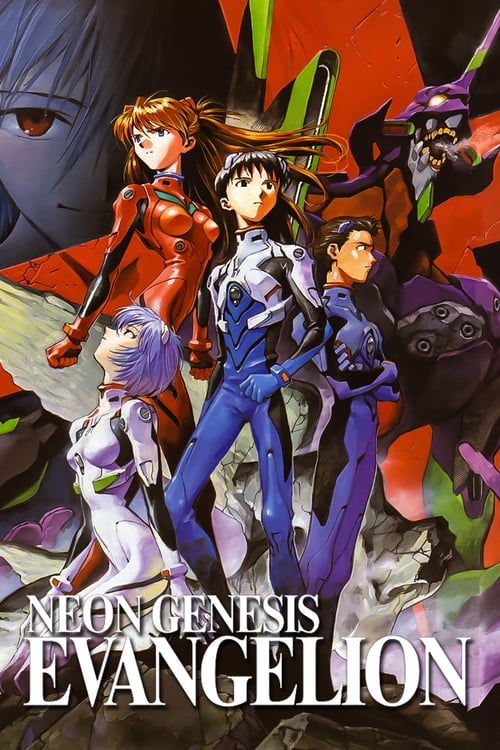
Start with Neon Genesis Evangelion, Hideaki Anno’s 1995 series, which runs 26 episodes. It follows Shinji Ikari, a teenager recruited to pilot a giant Evangelion unit against the mysterious Angels attacking Tokyo-3. The first half plays like a classic mecha series; the second half turns inward, becoming a psychological drama about its characters’ fears and loneliness. Watch all 26 episodes in order. Do not skip the final episodes because you have heard they are strange — their strangeness is the point, and it is exactly what the film that follows responds to.
Step Two: End of Evangelion
After the series, watch The End of Evangelion, the 1997 film directed by Hideaki Anno and Kazuya Tsurumaki that serves as the cinematic conclusion to the television series. The film retells the story’s climax in a far more literal, visceral way than the series finale did, showing the events the final episodes only suggested. The two endings are often described as parallel versions of the same conclusion rather than a simple before-and-after, and fans still debate how they fit together — which is part of the experience. The practical advice is simple: watch the film after the series, and let the two endings sit side by side in your mind. Some viewers watch the film after episode 24 and then finish episodes 25–26; either way, the film belongs at the end of the original run, not before it.
Step Three: The Rebuild Films
Only after finishing the original continuity should you turn to the Rebuild films: Evangelion: 1.0 You Are (Not) Alone, 2.0 You Can (Not) Advance, 3.0 You Can (Not) Redo, and 3.0+1.0 Thrice Upon a Time. The Rebuilds begin as a retelling of the series with modern animation, then diverge into something stranger and more personal, and they are best understood as a separate continuity — a new version of the story, not a sequel you need to complete the original. Watching them first would spoil the original’s revelations and rob the retelling of its meaning; watching them after lets you appreciate exactly where they follow the original and where they break away from it.
What Not to Do
The two mistakes Evangelion newcomers make are starting with the Rebuild films because they look newer, and skipping the series finale because it is abstract. Both mistakes cost you the experience the work is built around: the original series’ slow turn from mecha action to psychological drama, and the way its two endings answer each other. There are no filler episodes to skip and no alternate viewing orders that improve on the simple one. The series is short — 26 episodes — and the film is under ninety minutes, so the entire original run is a weekend’s viewing. Give it that weekend before touching the Rebuilds.
The Full Order, Summarized
The complete Evangelion watch order is: Neon Genesis Evangelion (26 episodes), then The End of Evangelion, then the four Rebuild films. That is the whole story, in the order that preserves its surprises and its arguments. It is a short watch with a long afterlife: few series reward rewatching as richly, and few watch orders are as simple once you know which ending is which.