Category: Articles

  • Se7en Ending Explained: What’s in the Box and John Doe’s Final Sin

    Se7en Ending Explained: What’s in the Box and John Doe’s Final Sin

    ⚠ Spoilers ahead

    Se7en ending explained: the box contains Detective Mills’ wife’s head, and by shooting John Doe, Mills completes the killer’s design. The final sin is not Doe’s, it is Mills’.

    The Seven Sins Pattern

    Detectives Somerset, played by Morgan Freeman, and Mills, played by Brad Pitt, hunt a serial killer who murders according to the seven deadly sins. Gluttony, Greed, Sloth, Lust and Pride each claim a victim, staged as grotesque moral lessons. Somerset, days from retirement, is weary and methodical; Mills is young, hot-headed and desperate to prove himself.

    For the full background, see our complete Se7en title page.

    The killer, John Doe, played by Kevin Spacey, surrenders voluntarily, covered in the blood of his victims, and offers to lead the detectives to the final two bodies. Somerset senses a trap, but Mills, eager for closure, agrees. The drive into the desert is the film’s quietest and tensest sequence, because the audience knows what the detectives do not: Doe is still in control.

    What’s in the Box

    A delivery van arrives with a package for Mills. Somerset opens it, recoils in horror, and tells Mills to put his gun down and not look inside. Doe, calm and smiling, explains: the box contains the head of Tracy, Mills’ wife, played by Gwyneth Paltrow. Doe visited their apartment that morning, killed her, and took her head as the final piece of his design.

    Then comes the second revelation, which is worse. Tracy was pregnant. She had confided in Somerset, not in Mills, because she was unsure whether to keep the baby in a world as bleak as the one Somerset describes. Mills learns, in the worst possible moment, that he has lost not only his wife but also a child he never knew existed.

    Envy and Wrath: Doe’s Final Sin

    Doe explains his own sin: Envy. He envied Mills’ ordinary life, his youth, his wife, his future. He killed Tracy because he wanted what Mills had and could not bear to watch him have it. That leaves one sin unclaimed: Wrath. Doe has designed the finale so that Mills, in rage and grief, will shoot him, becoming Wrath himself and completing the seven sins.

    Somerset begs Mills not to do it. He knows that killing Doe is exactly what Doe wants, and that it will destroy Mills’ life. Mills hesitates, screaming, weeping, gun shaking, and then fires again and again into Doe’s body. The killer wins posthumously, because his artwork is complete and his final victim is the detective’s soul.

    What the Ending Means

    The film ends with Somerset’s narration, adapting a line from Hemingway: the world is a fine place and worth fighting for, and he agrees with the second part. It is a bleak but not hopeless note. Somerset, who planned to retire into despair, stays, because Mills’ ruin has shown him that someone still has to fight.

    The rain-soaked, unnamed city is part of the ending’s power. It never stops raining until the desert finale, as if the weather itself lifts only when the horror is complete. The contrast between the dark city and the bright, empty desert makes the final scene feel exposed and inescapable, with nowhere left for Mills to hide from the truth.

    Se7en’s ending works because it refuses catharsis. The killer is dead, but there is no victory, no justice and no comfort. The box, the pregnancy and the final sin turn a police procedural into a tragedy about how evil can use a good man’s grief against him.

    For another Fincher finale where the twist reframes everything, see our complete Fight Club title page.

    For the full film guide, cast and trailer, see our complete Se7en title page.
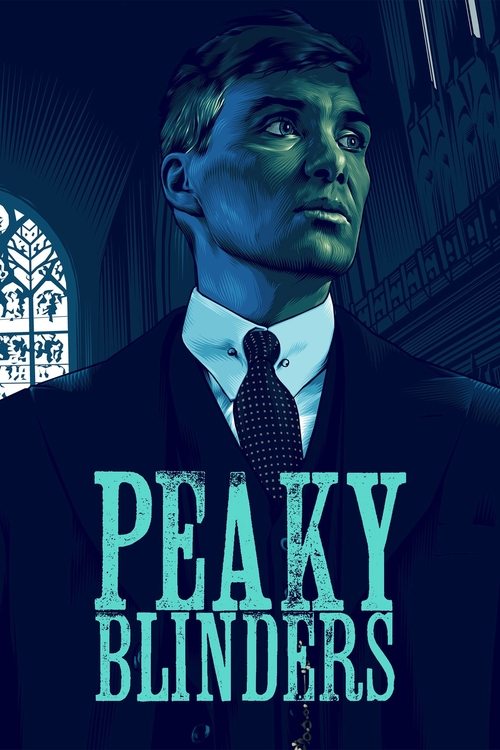
  • Were the Peaky Blinders Real? The True Story Behind Tommy Shelby’s Gang

    Were the Peaky Blinders Real? The True Story Behind Tommy Shelby’s Gang

    peaky blinders true story is one of the most asked questions about the BBC drama, and the answer is a satisfying mix: yes, there really was a Peaky Blinders gang — but Tommy Shelby and his family are inventions. Peaky Blinders, created by Steven Knight, takes a real name, a real city and a real era, then builds a fictional empire on top of them. Here is what is real, and what is not.

    The Real Gang: Birmingham’s Peaky Blinders

    The real Peaky Blinders were a street gang in Birmingham in the late 19th and early 20th centuries, active roughly from the 1880s to the 1910s. They were known for violence, gambling and territorial control of the city’s streets, and they were one of several youth gangs of the era. The name itself is often linked to their peaked caps — the flat caps that became the gang’s signature look, and the show’s most famous costume choice. That part of the legend, at least, is grounded in how the gang dressed.

    The Legend: Razor Blades in the Caps

    The most famous part of the Peaky Blinders legend — that they sewed razor blades into their caps and used them as weapons — is generally treated by historians as legend rather than fact. The story is dramatic, and the show leans into it, but there is little solid evidence that the real gang fought that way. It is the kind of detail that grows in retelling: a vivid image that outlives the gang itself. Treat it as folklore, not history — though it makes for unforgettable television.

    The Crackdown: How the Real Gang Ended

    The real gang was largely broken up before the era the show depicts, through police efforts associated with Birmingham’s Chief Constable Charles Haughton Rafter, who led a crackdown on the city’s gangs. By the time the show’s story begins in 1919, after the Great War, the original Peaky Blinders were already fading. The show’s Inspector Campbell, played by Sam Neill, is a fictional character — but he represents the real pressure the police brought to bear on Birmingham’s gangs in that era.

    The Fiction: Tommy Shelby and His Family

    Tommy Shelby, played by Cillian Murphy, and the Shelby family are fictional creations of Steven Knight. Knight has said that family stories about relatives who lived in that Birmingham milieu inspired him — the world of the show, its pubs, its bookmakers and its street culture, comes from real family memory. But the Shelbys themselves, their rise from street gang to criminal empire, and their enemies and alliances, are invented. The show is set in 1919 Birmingham, but its story is a work of imagination laid over a real place.

    The Real Rivals: Billy Kimber and the Birmingham Boys

    Not everything in the show is invented, though. Billy Kimber and the Birmingham Boys, who appear as rivals in the show’s world, were real figures — a genuine rival gang that clashed with Birmingham’s street gangs. Their presence is a reminder that Knight built his fiction from real material: real gangs, real rivalries, real streets. The show’s genius is in how it weaves those real threads into a story that never actually happened.

    The Bottom Line

    So were the Peaky Blinders real? The gang was real, the city was real, the era was real — and the razor-blade caps are probably legend. Tommy Shelby, however, is fiction, and so is the empire he builds. The show is best understood as a myth built on a true foundation: a real gang’s name, worn by a fictional family, in a city that really did breed men like them.

    Ready to rewatch it with that knowledge? Start with Peaky Blinders from series one — and watch how a real Birmingham street gang became television legend.

  • Parasite Ending Explained: The Letter, the Bunker and Ki-woo’s Impossible Dream

    Parasite Ending Explained: The Letter, the Bunker and Ki-woo’s Impossible Dream

    ⚠ Spoilers ahead

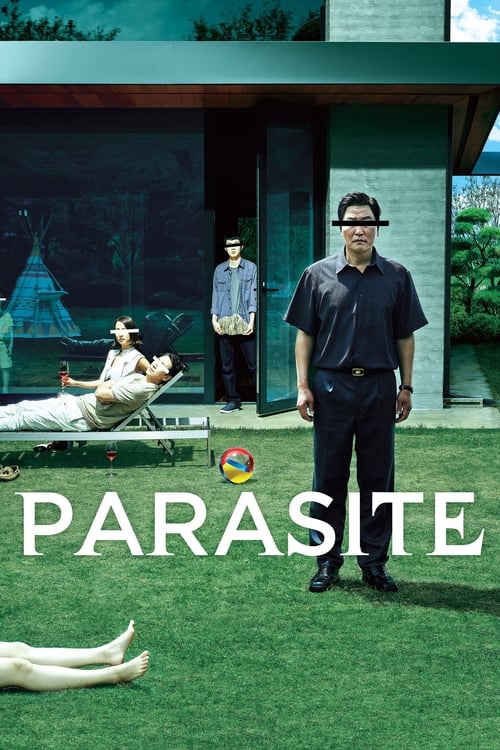
    Parasite ending explained: the Kim family con ends in blood, the father vanishes into a secret bunker, and the son’s hopeful plan to buy the house is a fantasy the film itself quietly dismantles.

    How the Con Collapses

    The Kim family, living in a cramped semi-basement, cons its way into jobs with the wealthy Park family. Ki-woo tutors the Parks’ daughter, Ki-jung poses as an art therapist, Chung-sook becomes the housekeeper and Ki-taek the driver. The Parks never suspect that their four employees are one family.

    For the full background, see our complete Parasite title page.

    The plan unravels when the Parks’ former housekeeper, Moon-gwang, returns in a rainstorm and reveals the house’s secret: her husband, Geun-se, has lived for years in a hidden bunker beneath the house, built by the previous owner. A struggle follows, Moon-gwang dies, and Geun-se remains trapped below while the Kims scramble to hide their own secret from the returning Parks.

    The Birthday Party Bloodbath

    At the Parks’ garden birthday party, Geun-se escapes the bunker, armed with a knife and driven mad by years underground. He stabs Ki-jung, who dies in her brother’s arms, and chaos erupts. Chung-sook kills Geun-se with a barbecue skewer, and Ki-woo is struck on the head with the scholar’s rock, the supposed good-luck charm that has followed the family through the film. He survives, but with a brain injury.

    The trigger for the final murder is smell. Mr. Park, recoiling from Geun-se’s odor as he holds the dying man, covers his nose in disgust. Ki-taek, who has endured the Parks’ comments about his own smell throughout the film, sees the gesture and snaps. He stabs Mr. Park to death in front of the guests, then flees, disappearing into the bunker himself. The smell that marked the class divide becomes the spark for murder.

    The Letter and the Morse Code

    Months later, Ki-woo, recovered but changed, watches the Park house from outside. One night he notices the house lights flickering in Morse code. It is his father, alive in the bunker, sending a message: he is safe, he is sorry, and he knows the police are watching. Ki-taek plans to stay hidden underground, possibly forever, rather than face arrest.

    Ki-woo writes his father a letter, narrated over the final scenes. He promises to study hard, earn money and one day buy the house, so that father and son can finally meet in the sunlight, in the front yard, as free men. It is a beautiful promise, and the film films it like a dream: father and son embracing in the garden.

    Why the Dream Is Impossible

    Then the camera pulls back, and Ki-woo is still in the semi-basement, writing the letter by a dim window. The house purchase is not a plan; it is a fantasy. The film’s final shot mirrors its first, Ki-woo in the same cramped room, and the audience understands that the class gap that made the con necessary has not closed. A poor young man with a brain injury is not going to buy a mansion, and the letter is a way of coping, not a roadmap.

    That is the cruelty of Parasite’s ending. The Kims are not villains, and the Parks are not monsters; they are people divided by wealth, and the film refuses to pretend that hard work alone bridges the gap. The bunker, the smell and the letter are all symbols of a system in which the poor live underneath the rich, unseen, until the rain floods the basement and the violence spills upstairs.

    For another ending where class and survival collide, see our complete Squid Game title page.

    For the full film guide, cast and trailer, see our complete Parasite title page.

  • Fight Club Ending Explained: The Narrator, Marla and What the Final Shot Means

    Fight Club Ending Explained: The Narrator, Marla and What the Final Shot Means

    ⚠ Spoilers ahead

    Fight club ending explained: the narrator and Tyler Durden are the same person, and the film’s final shot is both a disaster and a rescue. The buildings fall, but the man watching them finally knows who he is.

    The Twist: Tyler Is the Narrator

    The unnamed narrator, played by Edward Norton, is an insomniac office worker numbed by consumerism, support groups and a job he hates. Tyler Durden, played by Brad Pitt, is everything he is not: fearless, funny, free and violent. Tyler founds a fight club in the basement of a bar, and it spreads into a national movement.

    For the full background, see our complete Fight Club title page.

    The twist is that Tyler does not exist. He is the narrator’s dissociative alter ego, a split personality created by a man who could not face his own anger. Other characters only ever see the narrator, and every scene with Tyler alone is really the narrator alone. When the narrator beats himself up in his boss’s office, he is Tyler. When he kisses Marla, he is Tyler. The film hides this in plain sight, never showing Tyler and the narrator in the same frame in a way that another character witnesses.

    Marla: The One Real Person

    Marla Singer, played by Helena Bonham Carter, is real, and that is why she matters. She is the one person the narrator cannot absorb into his fantasy, because she keeps showing up at the same support groups and refusing to be ignored. Tyler sleeps with her; the narrator claims he does not. Marla is drawn to Tyler’s danger and repelled by the narrator’s emptiness, not realizing they are the same man.

    At the climax, Marla becomes the narrator’s anchor. When he realizes Tyler’s plan, he tries to warn her and get her out of the city, because she is the only person he truly cares about outside himself. Her survival is what makes the ending human rather than just explosive.

    Project Mayhem and the Final Night

    Tyler’s fight club grows into Project Mayhem, an anti-consumerist terrorist network that plans to erase debt by destroying the headquarters of the major credit card companies. The narrator, horrified, tries to stop it, but he is fighting himself, and Tyler always knows what he will do before he does it.

    The climax takes place on the top floor of a skyscraper rigged with explosives, with the narrator held at gunpoint by Tyler. In the film’s most famous moment, the narrator puts the gun in his own mouth and shoots himself through the cheek. The bullet kills Tyler, because Tyler lives only in the narrator’s head, but the narrator survives. For the first time, he is alone in his own mind.

    What the Final Shot Means

    The bombs still go off. The credit card buildings collapse in a controlled demolition, erasing the debt records, and the narrator and Marla stand at the window holding hands as the skyline falls. His line, You met me at a very strange time in my life, is both an apology and a beginning.

    The Pixies song Where Is My Mind? plays over the collapse, a wry joke that underlines the point: the narrator’s mind is finally his own again. The song turns destruction into something strangely calm, as if the film is asking whether the world that replaces the old one will be any better.

    The ending is deliberately ambiguous about whether the destruction is liberation or catastrophe. The film does not celebrate the bombing, but it does celebrate the narrator’s awakening. He has stopped lying to himself, he has chosen a real relationship over a fantasy, and he is finally awake, watching the world he helped break.

    For another dark Fincher finale built on a devastating reveal, see our complete Se7en title page.
    For the full film guide, cast and trailer, see our complete Fight Club title page.

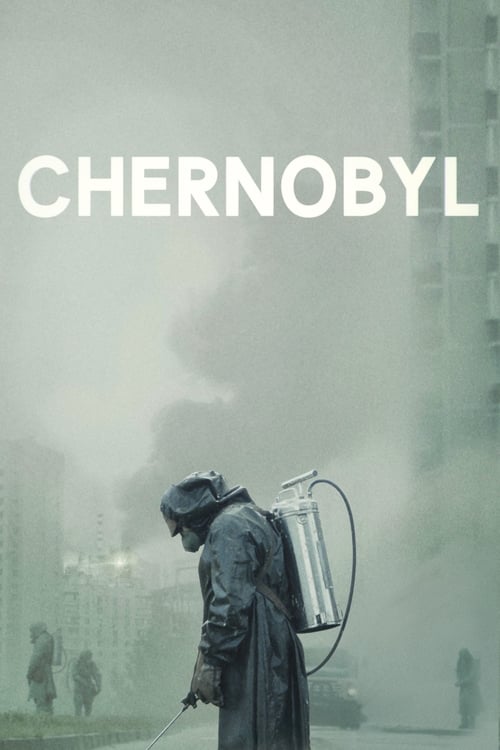
  • How Accurate Is Chernobyl? The True Story Behind HBO’s Miniseries

    How Accurate Is Chernobyl? The True Story Behind HBO’s Miniseries

    chernobyl true story accuracy is the question every viewer asks after HBO’s five-part miniseries, because Chernobyl feels like a documentary — and in its broad strokes, it is remarkably faithful. Created by Craig Mazin and directed by Johan Renck, the series retells the April 26, 1986 explosion of Reactor 4 at the Chernobyl Nuclear Power Plant and the desperate response that followed. But it also compresses, combines and invents. Here is what is true, what is dramatized, and what is outright changed.

    What Is True: The Disaster and the Response

    The core events are real. In the small hours of April 26, 1986, Reactor 4 exploded during a safety test, releasing vast amounts of radioactive material. Firefighters were sent to the roof without adequate protection, miners were brought in to dig beneath the reactor, and a massive cleanup operation — the liquidators — followed. Valery Legasov, played by Jared Harris, was a real Soviet scientist who led the scientific response, and Boris Shcherbina, played by Stellan Skarsgård, was the real government official in charge of the cleanup. The scale of the disaster and the heroism of the response are not exaggerated.

    What Is True: Legasov, the Tapes and the Design Flaw

    Legasov’s story is also broadly real. He recorded tapes explaining what went wrong, and he died by suicide in 1988, two years after the disaster — a fact the series treats with appropriate gravity. The central scientific claim of the show is real too: the RBMK reactor design had a dangerous flaw, and the Soviet system had hidden it. The series’ famous line — that every lie incurs a debt to the truth — captures Legasov’s documented conviction, even if the exact words are the show’s own.

    What Is Invented: Ulana Khomyuk

    The show’s most important invention is Ulana Khomyuk, the scientist who helps Legasov uncover the truth. Khomyuk is a composite character, representing the many scientists who worked on the disaster — the series itself acknowledges this. She never existed as a single person, and her scenes are dramatized. That is a deliberate choice: Mazin wanted one character to carry the scientific investigation, rather than dozens. It works dramatically, but viewers should not go looking for Khomyuk in the history books.

    What Is Changed: The Trial and the Speech

    The trial that closes the series is the show’s biggest departure from fact. In the series, Legasov delivers a dramatic courtroom speech exposing the design flaws, and all three defendants — including plant deputy chief engineer Anatoly Dyatlov, who was convicted and sentenced to ten years — are condemned in the same hearing. In reality, the trial was different: Legasov did not deliver that speech in court, and the proceedings were far less theatrical. The show compresses years of investigation and blame into a single confrontation, because that is what drama demands — but it is not what happened.

    What Is Debated: The Bridge of Death and the Divers

    Two of the show’s most haunting details are also the most debated. The so-called Bridge of Death — where residents supposedly watched the fire and later died of radiation — is often described in reporting as exaggerated, with little evidence for the legend as told. And the three divers who drained the water beneath the reactor, often said in popular retellings to have died within weeks, in fact survived for years afterward. The series implies a darker fate for both, and that is where its accuracy is weakest.

    The Bottom Line

    So how accurate is Chernobyl? Remarkably accurate on the disaster itself, the science and the human cost — and openly dramatized on the trial, the composite scientist and a few famous details. It is one of the most faithful historical dramas ever made, but it is still a drama. The truth it tells is real; the courtroom speech is not.

    Ready to rewatch it with that lens? Start with Chernobyl from episode one — and notice how the most accurate moments are the quietest ones.

  • Memento Ending Explained: Leonard’s Lie and the Truth About Sammy Jankis

    Memento Ending Explained: Leonard’s Lie and the Truth About Sammy Jankis

    ⚠ Spoilers ahead

    Memento ending explained: the film runs backwards so you feel Leonard’s confusion, and its final scene reveals that Leonard is not hunting his wife’s killer at all. He is choosing a lie, because the truth is worse than the hunt.

    The Story in Chronological Order

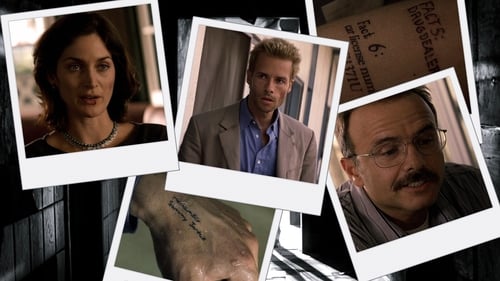
    Leonard Shelby, played by Guy Pearce, suffers from anterograde amnesia after an attack in his home. He cannot form new memories, so he lives by Polaroid photographs, handwritten notes and tattoos inked across his body. His stated mission is to find the man who raped and murdered his wife, a man he knows only as John G.

    For the full background, see our complete Memento title page.

    The film tells its story in reverse. Each color scene ends where the previous one began, so the audience discovers the truth at the same pace Leonard forgets it. The black-and-white scenes, told forwards, show Leonard in a motel room, explaining his condition on the phone. The two timelines meet at the end, and the meeting is devastating.

    Sammy Jankis: The Man Who Was Leonard

    Throughout the film, Leonard tells the story of Sammy Jankis, a man he investigated as an insurance claims adjuster. Sammy also could not form new memories after an accident, and his wife, doubting his condition was real, tested him by asking him to inject her insulin again and again. Sammy gave her the injections, and she died of an overdose.

    Leonard insists Sammy’s condition was psychological, not physical, and denies his claim. The film’s final revelation is that Sammy’s story is Leonard’s story. Leonard’s wife survived the attack, but she was diabetic, and she tested Leonard the same way, asking him to give her insulin repeatedly. Leonard, unable to remember the earlier doses, gave her a fatal overdose. He killed his own wife, and his mind buried the memory.

    Teddy and the Lie Leonard Chooses

    Teddy, played by Joe Pantoliano, is the man Leonard kills in the film’s first scene, which is chronologically the last event. Teddy, whose real name is John Edward Gammell, is a police officer who once helped Leonard track down the real attacker. Leonard killed that attacker long ago, but because he cannot remember, Teddy kept giving him new John G. targets, using Leonard to kill drug dealers and other criminals.

    In the final scene, Teddy tells Leonard the truth: his wife survived, Leonard killed her with insulin, and the hunt is a fiction Leonard needs to keep living. Leonard cannot bear it, so he deliberately creates a new lie. He burns his wife’s photograph and the evidence, writes a note telling himself not to believe Teddy’s lies, and sets himself up to kill Teddy next, giving himself a new John G. to hunt.

    Along the way, Leonard is manipulated by almost everyone he meets. Natalie, played by Carrie-Anne Moss, uses his condition to get him to kill for her, and the drug dealer Dodd becomes another pawn in a chain of people who know Leonard will forget what they did. That manipulation is part of the tragedy: Leonard’s system of notes and tattoos, built to protect him, is exactly what others exploit.

    What the Ending Means

    Leonard’s last act is a choice, not a mistake. He knows his memory will erase the truth, so he plants a false purpose that will survive forgetting. The film ends where it began, with Leonard photographing Teddy’s corpse and driving off, ready to hunt a man he has already killed, in a story that will repeat forever.

    That is why Memento is told backwards. The audience, like Leonard, starts with certainty and ends with doubt, and the final scene forces you to ask whether a comforting lie is better than an unbearable truth.

    For another twist finale built on an unreliable narrator, see our complete The Usual Suspects title page.

    For the full film guide, cast and trailer, see our complete Memento title page.

  • Is Dahmer Based on a True Story? Separating Fact From Netflix’s Monster

    Is Dahmer Based on a True Story? Separating Fact From Netflix’s Monster

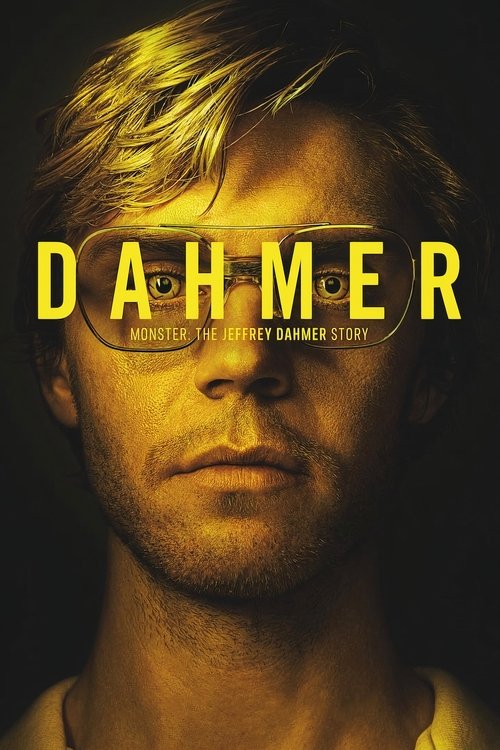
    is dahmer based on a true story is a question with a darker answer than most Netflix dramas, because Dahmer – Monster: The Jeffrey Dahmer Story retells the crimes of a real serial killer. Between 1978 and 1991, Jeffrey Dahmer murdered 17 young men and boys in Milwaukee, Wisconsin. The series, created by Ryan Murphy and Ian Brennan, dramatizes that real history — but like all dramatizations, it mixes fact with invention. Here is where the line falls.

    The True Core: The Crimes and the Arrest

    The central facts are real. Dahmer’s killings took place between 1978 and 1991, mostly in Milwaukee, and his victims were young men and boys, many of them Black, Asian or Latino. He was arrested in July 1991 after a victim, Tracy Edwards, escaped from his apartment and led police back there, where officers discovered evidence of his crimes. He was convicted in Wisconsin in 1992 and was killed in prison in 1994. Those pillars of the story — the span of years, the city, the arrest and the conviction — are the documented record, and the series follows them closely.

    What the Series Centers: The Victims

    One of the series’ stated aims is to center the victims rather than the killer. Episodes pause on the lives of the young men Dahmer killed — their families, their jobs, their ambitions — and on the neighbors and communities who noticed things were wrong. The show’s most widely discussed episode focuses on Tony Hughes, a deaf aspiring model, and his family. That emphasis on the victims’ humanity is a creative choice, but it is built on real people whose names and stories mattered, and the series deserves credit for refusing to treat them as footnotes.

    What Is Dramatized: Conversations and Composite Moments

    As with any true-crime drama, much of what you see on screen is reconstructed. Private conversations, the exact wording of exchanges and the timing of some scenes are dramatized, because no camera was present. Some characters and moments are composites or are compressed for storytelling, and the series rearranges events across its ten episodes for dramatic effect. Viewers should treat dialogue and scene-by-scene detail as interpretation, not transcript — the broad facts are documented, the private moments are imagined.

    The Controversy: Families Who Said They Were Not Consulted

    The series also drew real criticism after release. Some relatives of Dahmer’s victims said publicly that they were not consulted about the show and that watching it retraumatized them. That backlash became part of the story of the series itself, and it is an important part of answering the question honestly: a show can be based on a true story and still be contested by the people closest to it. The debate over who gets to tell a true-crime story, and who profits from it, has followed the series ever since.

    How to Watch It Responsibly

    The best way to watch this series is slowly, and with the victims in mind. Read up on the real cases alongside the episodes, notice where the show compresses or invents, and remember that the most sensational scenes are the least important ones. The real story is not the killer’s psychology — it is the system that failed to stop him, and the people he took.

    The Bottom Line

    So is Dahmer based on a true story? Yes — more directly than most shows on this list. The killer, the victims, the city and the arrest are real, and the series follows the documented record in its broad strokes. But the conversations, the pacing and some of the detail are dramatized, and the families’ objections are a real part of its legacy. Treat it as a dramatization of a true story, not as a documentary — and remember that behind every scene, there were real people.

    Ready to watch it with that context in mind? Start with Dahmer – Monster: The Jeffrey Dahmer Story and pay attention to the victims’ episodes — they are the heart of the show.

  • Is Adolescence Based on a True Story? The Real Cases Behind Netflix’s One-Shot Drama

    Is Adolescence Based on a True Story? The Real Cases Behind Netflix’s One-Shot Drama

    is adolescence based on a true story is the question almost everyone asks after watching Netflix’s one-shot drama, and the short answer is no — not in the way most viewers mean it. Adolescence is a work of fiction: Jamie Miller, his family and the murder at the story’s center were invented by creators Stephen Graham and Jack Thorne. But the series is rooted in real concerns, and understanding which parts are real — and which are not — makes the show hit even harder.

    The Short Answer: Fiction, Inspired by Real News

    Graham and Thorne have said in interviews that the series was not based on one specific case. Instead, it was inspired by news reports of real cases of teenage knife crime in the UK, and by their concern about the online influences shaping boys’ lives. The Millers are fictional, the victim is fictional, and the investigation is fictional — but the pattern the show describes, of young teenagers caught up in violence and online culture, is one the creators saw reflected in real headlines.

    What Is Real: The World Around the Story

    What is real is the context. Knife crime involving teenagers has been a persistent and widely reported problem in the UK, and the show’s details — the police procedure, the school environment, the way rumors and images spread among classmates — are drawn from the world the creators recognized. The series also reflects real debates about social media, incel culture and the so-called manosphere, and about how easily a lonely teenager can find dark corners of the internet. None of that required inventing a case: the headlines were already there.

    What Is Invented: Jamie, the Millers and the Case

    Everything specific to the plot is invented. There is no real Jamie Miller, no real Eddie and Manda Miller, and no single murder that the four episodes retell. The show’s structure — four episodes, each filmed in a single continuous take, each shifting perspective from the arrest to the school to the psychologist’s room to the family home — is a dramatic invention too, designed to make the audience sit with the story rather than solve it. The series deliberately withholds a simple explanation, because its creators believe there is not one.

    Why the Confusion Happens

    The confusion is understandable. The show feels like a documentary: the single-take camera, the naturalistic acting, the absence of music telling you how to feel. Owen Cooper’s performance as Jamie is so convincing that viewers assume they are watching a real teenager’s story. And the subject matter is so close to real news that the line between drama and reportage blurs. That realism is the point — Graham and Thorne wanted the audience to feel that this could be any family, not to believe that it was one particular family.

    The Conversation the Show Started

    Because the story feels so plausible, it sparked exactly the conversation its creators hoped for: about what boys see online, about how schools and parents respond, and about whether anyone is really paying attention. Viewers do not need a real case to recognize the world on screen — they need only look at the news. That recognition, more than any single fact, is what gives the series its power.

    The Bottom Line

    So is Adolescence based on a true story? No single true story — but it is based on true concerns, real reporting and a real national conversation about boys, violence and the internet. The fiction is the vehicle; the reality is the question it leaves behind. That is why the show sparked debates in schools, in Parliament and in living rooms: not because it retold a case, but because it felt like it could have.

    Ready to watch it with fresh eyes? Start with Adolescence from episode one — and notice how much of what shocks you is not the crime, but how ordinary everything around it looks.

  • The Prestige Ending Explained: The Transported Man Trick and the Twin Twist

    The Prestige Ending Explained: The Transported Man Trick and the Twin Twist

    ⚠ Spoilers ahead

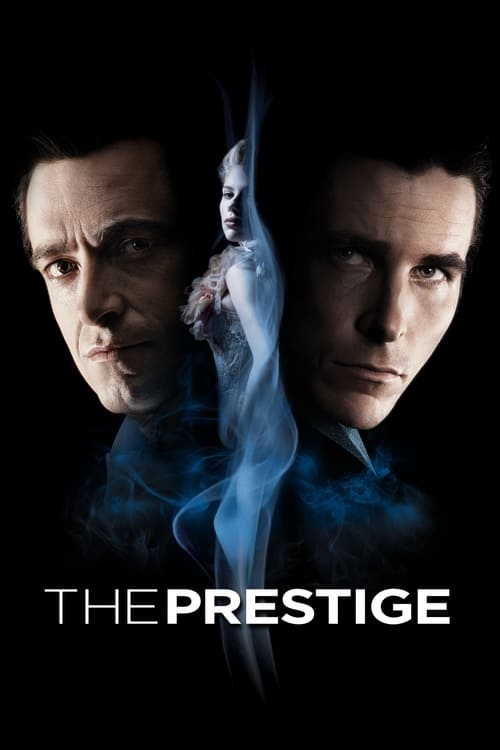
    The prestige ending explained: the Transported Man is performed two different ways, and only one of them is a trick. One magician uses a twin, the other uses a machine that kills him every night, and the final scene reveals the price both men paid.

    Borden’s Secret: He Was Two Men All Along

    Alfred Borden, played by Christian Bale, is not one man but identical twin brothers sharing a single life. One twin loves Sarah, the other loves Olivia, and they take turns being Borden, which is why Sarah says her husband sometimes does not mean it when he says he loves her. She senses the difference, and it drives her to suicide.

    For the full background, see our complete The Prestige title page.

    The twins’ double act is the Transported Man: one brother waits above the stage in a door, the other catches the ball below, and the audience sees a man vanish and reappear instantly. Their secret is protected by Fallon, their engineer, who is actually the other twin in disguise. The film hides this in plain sight: Borden’s fingers, his changing moods, and the fact that he is in two places at once.

    Angier’s Machine: A Trick That Kills

    Robert Angier, played by Hugh Jackman, cannot accept that Borden’s trick is a double, so he seeks a real method. He travels to Colorado to meet Nikola Tesla, played by David Bowie, who builds him a machine meant to transport matter. The machine does something else: it duplicates whatever is placed inside it.

    Every night, Angier steps into the machine and a duplicate appears at the back of the theater, while the original drops through a trapdoor into a locked water tank and drowns. Angier never knows which version of himself survives the night, the one who drowns or the one who takes the bow, and he accepts that bargain a hundred times. His obsession, fed by his wife Julia’s death during Borden’s trick years earlier, turns him into a murderer of himself.

    The Final Night: Tanks, a Hanging and a Shot

    The ending plays out in layers. At Angier’s final performance, Borden goes backstage and finds the tank, and Angier frames him for murder when a duplicate drowns. One twin is tried and hanged for a murder he did not commit, because the court cannot believe the machine exists. The surviving twin, disguised as Fallon, then visits Angier, now living as Lord Caldlow, in the basement where the tanks are stored.

    There, row after row of water tanks hold the drowned duplicates of Angier, one for every performance. The surviving Borden shoots Angier, who dies admitting he never understood the simplest trick of all: that Borden was two men. Cutter, played by Michael Caine, walks past the tanks as he leaves, finally seeing the horror Angier hid. Borden reunites with his daughter Jess, the one innocent thing left in a story about two men who destroyed everything they loved.

    Why the Ending Works

    The film is built like a magic trick itself, in three parts: the pledge, the turn and the prestige. The pledge shows you something ordinary, two rival magicians. The turn makes it extraordinary, a man who teleports. The prestige brings it back, and the revelation reframes everything: Borden’s trick cost him his brother and his wife, while Angier’s trick cost him his life, a hundred times over.

    That is the film’s cruel symmetry. Borden shared his life with his twin and lost half of it. Angier refused to share anything, and so he died alone, surrounded by copies of himself.

    For another puzzle-box finale from the same director, see our complete Memento title page.

    For the full film guide, cast and trailer, see our complete The Prestige title page.

  • Adolescence Cast: Owen Cooper’s Breakout and Stephen Graham’s Double Role

    Adolescence Cast: Owen Cooper’s Breakout and Stephen Graham’s Double Role

    adolescence cast is the reason Netflix’s one-shot drama hit so hard: a cast led by a complete newcomer, anchored by one of Britain’s great actors doing two jobs at once. Created by Stephen Graham and Jack Thorne and directed by Philip Barantini, Adolescence is a four-episode limited series, all premiered on March 13, 2025, in which police storm a family home at dawn and arrest 13-year-old Jamie Miller for the murder of a classmate. Here is who plays whom.

    Owen Cooper as Jamie Miller

    Owen Cooper plays Jamie Miller, the 13-year-old at the center of the story, in what was his first acting job — a breakout performance by any measure. Cooper carries the series’ most demanding scenes, including a long, unbroken conversation with a psychologist that tests any actor, let alone a newcomer. His Jamie is neither monster nor innocent in any simple sense: he is a frightened kid, sometimes angry, sometimes heartbreakingly small, and the show refuses to let the audience settle on one version of him.

    Stephen Graham’s Double Role: Creator and Eddie Miller

    Stephen Graham does double duty on the series: he co-created it with Jack Thorne, and he plays Eddie Miller, Jamie’s father. Eddie is the show’s emotional gut-punch — a working father who loves his son and cannot understand how his family arrived here, and whose own history with anger becomes one of the series’ hardest questions. Graham’s performance is quiet, wounded and utterly without vanity, and it is the reason the final episode lands the way it does.

    The Family and the Investigators

    Christine Tremarco plays Manda Miller, Jamie’s mother, holding a family together while it falls apart. Ashley Walters plays DI Luke Bascombe, the detective leading the investigation, whose own experience as a father complicates the case. Erin Doherty plays Briony Ariston, the clinical psychologist whose session with Jamie forms one of the series’ most talked-about episodes. Each of them gets a long, unbroken showcase — the show’s famous single-take format means there is nowhere to hide, and nobody does.

    Why the Single-Take Format Matters for the Cast

    Every episode of Adolescence is filmed in a single continuous take, which means the cast performs each hour in real time, without cuts to rescue a scene. That choice turns the acting into the special effect: the camera follows Jamie from his bedroom to a police van to an interview room, and the audience feels every minute of it. For Cooper, it was a baptism of fire; for Graham, it was a showcase for the restraint that has defined his career.

    The Episode Structure: Four Hours, Four Viewpoints

    The four episodes shift perspective as they go: the arrest and the police station, the school, the psychologist’s room, and finally the family home. Each hour hands the spotlight to a different corner of the cast, so by the end you have seen the same tragedy from every side — the boy, the investigators, the experts and the parents. It is a structure that trusts its actors completely, and it is why the series stays with you long after the final shot.

    Why This Cast Works

    The series works because it never asks its cast to explain its subject. There are no villains delivering speeches about the internet or knife crime — there are parents, police officers, teachers and a child, all trying to understand something that may not have a single explanation. Graham and Thorne built the show around that restraint, and the cast honors it: nobody overplays, nobody looks away, and the result is the most discussed British drama of its year.

    Ready to watch it in one sitting? Start with Adolescence from episode one — and watch for the moment Owen Cooper stops looking like a newcomer at all.