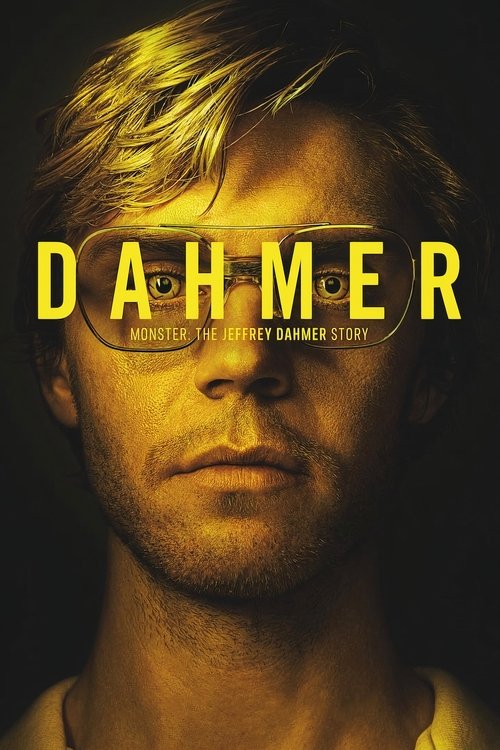
is dahmer based on a true story is a question with a darker answer than most Netflix dramas, because Dahmer – Monster: The Jeffrey Dahmer Story retells the crimes of a real serial killer. Between 1978 and 1991, Jeffrey Dahmer murdered 17 young men and boys in Milwaukee, Wisconsin. The series, created by Ryan Murphy and Ian Brennan, dramatizes that real history — but like all dramatizations, it mixes fact with invention. Here is where the line falls.
The True Core: The Crimes and the Arrest
The central facts are real. Dahmer’s killings took place between 1978 and 1991, mostly in Milwaukee, and his victims were young men and boys, many of them Black, Asian or Latino. He was arrested in July 1991 after a victim, Tracy Edwards, escaped from his apartment and led police back there, where officers discovered evidence of his crimes. He was convicted in Wisconsin in 1992 and was killed in prison in 1994. Those pillars of the story — the span of years, the city, the arrest and the conviction — are the documented record, and the series follows them closely.
What the Series Centers: The Victims
One of the series’ stated aims is to center the victims rather than the killer. Episodes pause on the lives of the young men Dahmer killed — their families, their jobs, their ambitions — and on the neighbors and communities who noticed things were wrong. The show’s most widely discussed episode focuses on Tony Hughes, a deaf aspiring model, and his family. That emphasis on the victims’ humanity is a creative choice, but it is built on real people whose names and stories mattered, and the series deserves credit for refusing to treat them as footnotes.
What Is Dramatized: Conversations and Composite Moments
As with any true-crime drama, much of what you see on screen is reconstructed. Private conversations, the exact wording of exchanges and the timing of some scenes are dramatized, because no camera was present. Some characters and moments are composites or are compressed for storytelling, and the series rearranges events across its ten episodes for dramatic effect. Viewers should treat dialogue and scene-by-scene detail as interpretation, not transcript — the broad facts are documented, the private moments are imagined.
The Controversy: Families Who Said They Were Not Consulted
The series also drew real criticism after release. Some relatives of Dahmer’s victims said publicly that they were not consulted about the show and that watching it retraumatized them. That backlash became part of the story of the series itself, and it is an important part of answering the question honestly: a show can be based on a true story and still be contested by the people closest to it. The debate over who gets to tell a true-crime story, and who profits from it, has followed the series ever since.
How to Watch It Responsibly
The best way to watch this series is slowly, and with the victims in mind. Read up on the real cases alongside the episodes, notice where the show compresses or invents, and remember that the most sensational scenes are the least important ones. The real story is not the killer’s psychology — it is the system that failed to stop him, and the people he took.
The Bottom Line
So is Dahmer based on a true story? Yes — more directly than most shows on this list. The killer, the victims, the city and the arrest are real, and the series follows the documented record in its broad strokes. But the conversations, the pacing and some of the detail are dramatized, and the families’ objections are a real part of its legacy. Treat it as a dramatization of a true story, not as a documentary — and remember that behind every scene, there were real people.
Ready to watch it with that context in mind? Start with Dahmer – Monster: The Jeffrey Dahmer Story and pay attention to the victims’ episodes — they are the heart of the show.
Leave a Reply