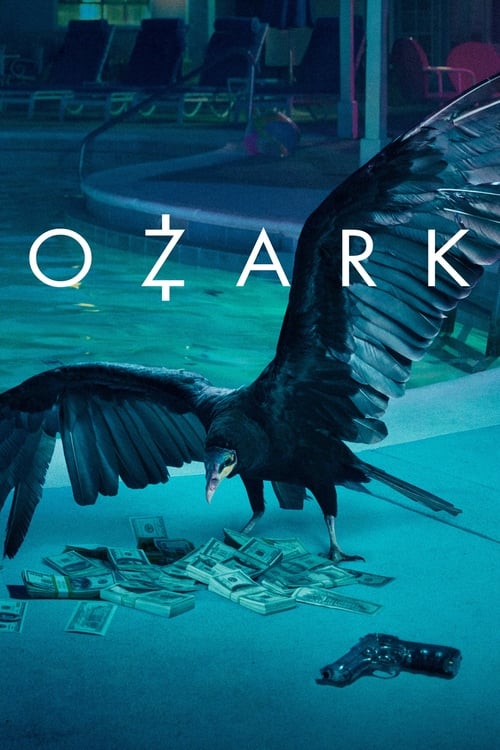
⚠ Spoilers ahead
The ending of Ozark is deliberately unsettling: the Byrdes survive, and Ruth does not. After seasons of laundering, lying and bargaining, Marty and Wendy secure a final deal that lets them walk away — cleansed, in the show’s terms, by a cartel arrangement and a charitable foundation. Ruth, the one character who kept trying to escape the Byrdes’ orbit, is shot dead by Camila in revenge for Javi’s murder. The final scene then returns to the Byrdes’ home, where private investigator Mel Sattem confronts them with evidence, Jonah raises a gun, and the screen cuts to black with a gunshot.
The Byrdes’ Last Deal, Explained
Marty and Wendy’s survival is not an accident. It is the result of a deal in which they agree to help the cartel clean its money through legitimate channels, including the foundation they have built to launder their reputation as well as their cash. The foundation gives them a respectable public face: philanthropists, not criminals. In Ozark’s moral universe, that is the point. The Byrdes do not escape because they are innocent. They escape because they are useful, and because they are willing to keep making deals that other people pay for.
That is why their ending feels so hollow. They are not punished, but they are not free either. They have bought their safety with more compromise, and the price is visible in their children, who have watched their parents lie, kill and bargain for years. Survival, for the Byrdes, is not redemption. It is just another transaction.
Ruth’s Final Scene
Ruth’s death is the emotional centre of the finale. She has spent the series trying to build a life outside the Byrdes’ control, and she finally seems close to it — until Camila kills her to avenge her son Javi, whom Ruth shot earlier. Ruth dies not because she failed, but because the cycle of revenge she was caught in never stopped. Her death is also a rebuke to the Byrdes: they survive by making deals, while Ruth, who refused to keep playing their game, pays with her life.
The scene is quiet and brutal, without a heroic last stand. Ruth’s death matters because she was the show’s conscience — the character who most clearly saw what the Byrdes were doing, and who most wanted something better. Killing her, while letting the Byrdes live, is Ozark’s final moral statement: in this world, goodness does not protect you. Deals do.
The Final Shot and the Cut to Black
The last scene brings Mel Sattem to the Byrdes’ house with evidence that could expose them. As he confronts them, Jonah picks up a gun. The screen cuts to black as a shot rings out, and the audience never sees who was hit, or whether Mel lives. The ambiguity is intentional. It forces viewers to decide what they believe about the Byrdes’ children: has Jonah become his parents, willing to kill to protect the family, or is the gunshot something else entirely?
The cut to black also mirrors the show’s larger argument. Ozark never believed in clean endings. The Byrdes’ story does not end with arrest or death, but with a question mark — a family that has survived everything, and a son who may have just crossed the same line his parents crossed years ago.
What the Ending Really Means
Taken together, the finale argues that the Byrdes did not win because they were smarter or better. They won because they were willing to keep negotiating with evil, while the people around them — Ruth above all — were not, or could not. Their last deal buys them a future, but it also confirms what the show has argued all along: in Ozark, survival and morality are not the same thing, and sometimes they are opposites.
For another story about a family destroyed by its own bargains, see Breaking Bad.
For the full story, cast and where to watch, see the complete guide to Ozark on DuloTV.
Leave a Reply