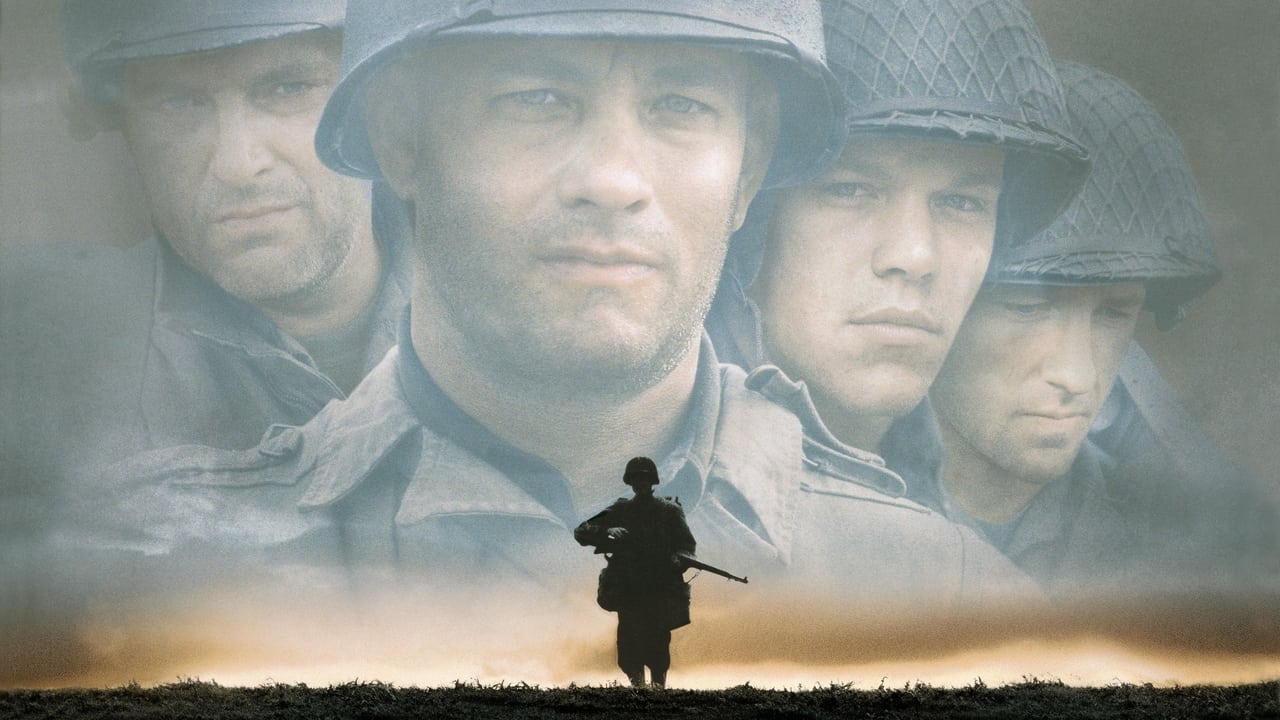
War films are judged by a harsher standard than any other genre, because they deal with real suffering. The best war movies are not the loudest or the most patriotic; they are the ones that show what combat costs the people fighting it, the people waiting at home, and the people caught in between. The three films below are our essential picks, and they could hardly be more different from one another. Start with Saving Private Ryan, the film that reset the genre for good.
The Benchmark: Saving Private Ryan
Saving Private Ryan (1998) remains the war film against which all others are measured. Steven Spielberg’s film, rated 82% on TMDB and running 2h 49m, opens with a D-Day landing sequence so visceral that veterans reportedly walked out of screenings, and then asks a harder question than any battle scene: after the beach, a squad led by Captain Miller, played by Tom Hanks, is sent to find Private Ryan, played by Matt Damon, so that his family will not lose a fourth son. Tom Sizemore plays Sergeant Horvath, Miller’s steady second-in-command. The film’s greatness lies in its refusal to make the mission feel clean or noble — it is about duty, doubt and the arithmetic of sacrifice.
The Nightmare: Apocalypse Now
Apocalypse Now (1979) takes the opposite approach and is just as essential. Francis Ford Coppola’s Vietnam epic, rated 83% and running 2h 27m, sends Captain Benjamin Willard, played by Martin Sheen, upriver on a secret mission to find Colonel Walter Kurtz, played by Marlon Brando, a decorated officer who has gone rogue. Along the way, Robert Duvall’s Lieutenant Colonel Bill Kilgore delivers one of cinema’s most quoted performances, surfing and napalm in the same breath. Where Saving Private Ryan is grounded in mud and blood, Apocalypse Now is a fever dream about what war does to the mind — and it has never been equalled on those terms.
The Devastation: Grave of the Fireflies
Grave of the Fireflies (1988) is the most devastating film on this list, and it contains almost no combat at all. Isao Takahata’s Studio Ghibli masterpiece, rated 85% on TMDB, follows two children, Seita and his little sister Setsuko, trying to survive in Japan during the final months of World War II after their home is firebombed. It is often mistakenly credited to Hayao Miyazaki, but it is Takahata’s film through and through: quiet, unsparing and built on small kindnesses that cannot hold back catastrophe. If the other two films show war from the front line, this one shows it from the kitchen table, and it may be the most honest of the three.
Why These Three Endure
What unites these films is not spectacle but seriousness. Spielberg shows the cost of a single life in a war of millions; Coppola shows the moral rot that a long war breeds; Takahata shows the civilians who pay for decisions made far above them. Together they cover the soldier, the officer and the child, and none of them lets the audience off the hook with an easy ending. That is why they still top every credible ranking decades later, and why they remain the first three war films we recommend to anyone who has not seen them.
Where to Start With War Cinema
If you have never watched a war film seriously, begin with Saving Private Ryan for its craft and clarity, then watch Grave of the Fireflies when you are ready for something quieter and harder to shake. Apocalypse Now rewards a second viewing, when you can stop trying to follow the plot and start feeling its descent. Together, the three films show why the genre endures: not because war is glorious, but because the best films about it refuse to look away.
For cast details and where to stream it, see our full Saving Private Ryan guide.
Leave a Reply