⚠ Spoilers ahead
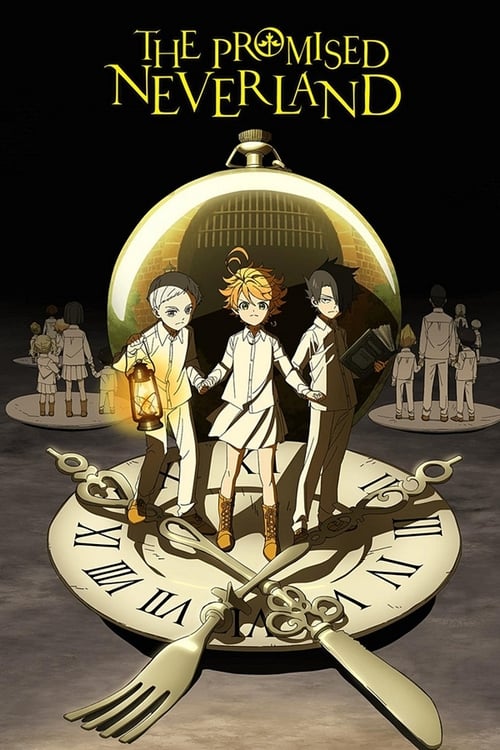
The ending of The Promised Neverland comes down to one choice: Emma refuses to save her family by destroying someone else’s. In the manga, she renegotiates the ancient Promise so that every child from the farms can reach the human world, and she pays a personal price for that bargain. The anime reaches a broadly similar destination — the Grace Field children escaping toward the human world — but it gets there much faster, cutting major manga arcs and softening the cost and consequences that make the manga ending hit so hard.
What Emma’s Deal Really Means
In the story’s mythology, the Promise is the bargain that divided the worlds: demons would receive children raised on farms, and in return they would leave humans alone. Emma’s journey is an attempt to rewrite that bargain rather than simply break it. She does not want a victory built on another massacre, even after everything the demons have done to children like Conny and the other Grace Field escapees. That moral line is the heart of the ending. Emma argues that a future in which humans are safe only because demons are exterminated is not really freedom, and it would turn the survivors into the very thing they fled.
In the manga, that argument leads to a new Promise. Emma offers herself as the price, and the cost is her memories of the family she fought to save. She reaches the human world, but separated from Norman and Ray and from the children who know her name. The final chapters then close the circle: Norman and Ray find her again, and Emma, even without her memories, responds to the people who never stopped looking for her. It is bittersweet rather than triumphant, because the rescue succeeds and the rescuer does not remember why she was rescued.
Why Norman’s Plan Matters So Much
Norman’s plan is the ending’s great counter-argument. Having survived and learned how the demon world works, he concludes that the only safe future is one without demons. His plan is logical, ruthless and, from his point of view, protective: destroy the enemy before the enemy can destroy the children again. Emma’s refusal is not naive in the manga’s telling, because she has also seen demon cruelty up close. She simply refuses to accept that safety requires genocide, and she searches for a third way that does not sacrifice either side’s future.
What the Anime Changed
The anime’s second season compresses and, in places, rewrites the manga’s final stretch. The Goldy Pond arc, the long search for the Seven Walls, and much of the slow build toward the new Promise are skipped or reduced to brief scenes. As a result, the anime’s Emma still stands against Norman’s plan and still leads the children toward the human world, but the reasoning, the sacrifices and the supporting characters who make that choice meaningful have far less room to breathe.
The biggest change is therefore one of weight rather than direction. The anime keeps the destination — escape, reunion and a human world beyond the farms — while losing much of the journey that explains why that destination matters. Viewers who watch only the anime can reasonably finish season two wondering what exactly Emma traded, why the demon world suddenly changes course, and why a story that began as a tense escape thriller ends in a montage. The manga answers those questions in detail; the anime asks you to accept its answers on trust.
What the Ending Is Really About
Strip away the fantasy, and The Promised Neverland ends as a story about what children are owed. Emma, Norman and Ray were raised to be eaten, taught to be grateful, and told that obedience was love. Their ending rejects that bargain in two ways: first by escaping, and then by refusing to build their freedom on someone else’s destruction. That is why the memory loss matters so much in the manga. Emma does not get to enjoy the ending she created in the way a hero normally would. She gives the children a future, and the story asks whether that future is still worth it when the person who paid for it cannot remember it.
The answer the manga gives is quiet and hopeful: yes, because the bonds Emma built do not disappear just because her memories do. Norman and Ray return for her, just as she once returned for the youngest children at Grace Field. Like other anime with endings that hinge on memory and sacrifice, such as Violet Evergarden, the point is not that the past is erased, but that love can be rebuilt from the people who refuse to let go of it.
For the full story, cast and where to watch, see the complete guide to The Promised Neverland on DuloTV.
Leave a Reply