⚠ Spoilers ahead
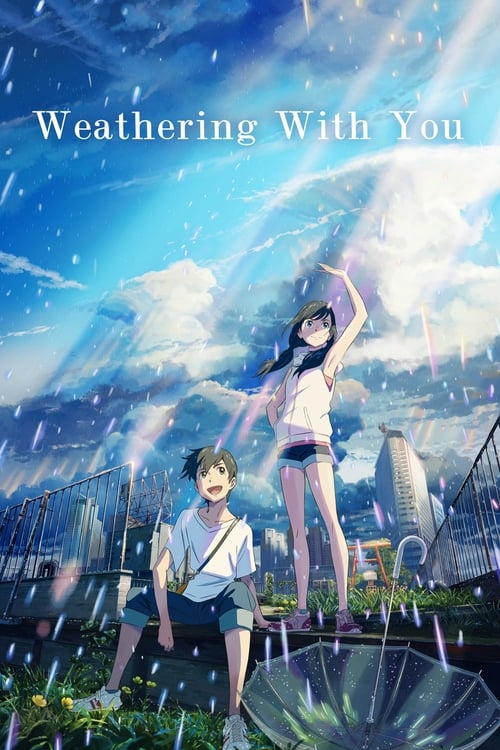
The ending of Weathering With You is one of Makoto Shinkai’s boldest choices. Hodaka Morishima, a runaway teenager in a rain-soaked Tokyo, is given a clear choice: let Hina Amano, the sunshine girl, sacrifice herself to restore the weather, or bring her back and let Tokyo stay flooded. He chooses Hina. The film does not pretend that choice is free. It shows us exactly what it costs — and then argues, quietly and firmly, that the cost was worth paying.
The Sunshine Girl’s Bargain
Hina’s power is the film’s central fantasy and its central problem. As a sunshine girl, she can pray the rain away, bringing clear skies wherever she goes. At first, this looks like a gift: Hodaka and Hina even start a small business clearing the weather for events. But every use of the power takes something from Hina. She is slowly fading, becoming less human and more weather, and the film makes clear that the only way to permanently stop the rain is for her to give herself to the sky completely.
The bargain is ancient and cruel: one girl’s life in exchange for good weather for a whole city. Weathering With You refuses to treat that bargain as obviously right. It asks why a city should be saved by a teenager’s sacrifice, and whether clear skies are really worth a human life.
Hodaka’s Choice
When Hina does sacrifice herself, the rain stops — but Hodaka cannot accept it. He fights his way back to her, through police, through the sky itself, and pulls her back to Earth. It is a rescue, but it is also a rebellion: Hodaka is saying that he will not trade a person he loves for better weather, even if the whole city disagrees.
The film is careful not to make Hodaka a traditional hero. His choice is selfish, in the plain sense: he wants Hina alive, and he puts that want above Tokyo’s comfort. But Weathering With You suggests that this selfishness is also a kind of honesty. Adults in the film have spent years accepting a world that uses up young people; Hodaka simply refuses to accept that deal.
Tokyo’s New Normal
The consequence is immediate and visible. With Hina back, the rain returns, and it does not stop. Tokyo begins to flood. By the film’s final scenes, whole districts are underwater, with boats moving through streets that used to carry cars and trains. The film does not hide this damage or wave it away. The water is beautiful in Shinkai’s animation, but it is also real: homes, roads and lives have been changed forever.
And yet people adapt. The flooded Tokyo of the ending is not a ruin; it is a city learning to live differently, with new routines, new transport and new skylines reflected in the water. The film’s point is not that flooding is good. It is that the world was already changing, and that clinging to the old normal was never really an option.
What the Ending Really Means
The final reunion between Hodaka and Hina, praying together in the rain, is the film’s answer to its own dilemma. They are not fixing the weather. They are choosing each other inside a broken weather system, and finding a way to live in it. Weathering With You ends with rain still falling — and with two young people standing in it, together, rather than apart.
For another Shinkai film about a young person caught between duty and feeling, see Suzume. For the full story, cast and where to watch, see the complete guide to Weathering With You on DuloTV.
Leave a Reply