⚠ Spoilers ahead
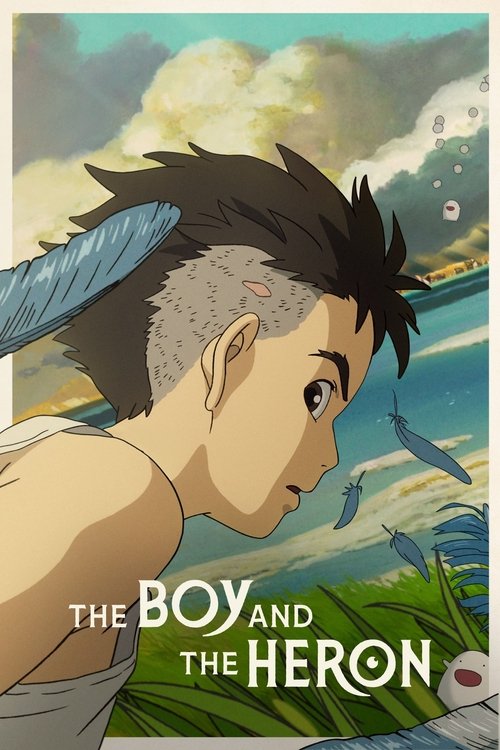
The ending of The Boy and the Heron is Hayao Miyazaki at his most personal and his most elusive. Mahito Maki, a boy who has lost his mother in a wartime fire, follows a talking grey heron into a tower and finds a world that seems to offer him everything he has lost — including a chance to remake it. His answer, in the end, is to refuse that offer and go back to the real world, carrying his grief with him rather than erasing it.
The Tower and the Other World
After his mother dies, Mahito moves to the countryside with his father and his stepmother, Natsuko. He is angry, withdrawn and grieving, and he wounds himself rather than face his new life. When Natsuko disappears into a mysterious tower on the family estate, Mahito follows her — and the grey heron, who has been taunting him, leads him into a strange other world of pelicans, parakeets, sea creatures and a young woman named Himi.
The tower’s world is not a simple fantasy land. It is a place built from memory and loss, where the dead and the living seem to brush against each other. Mahito’s journey through it is, in effect, a journey through his own grief: he meets people who help him, people who frighten him, and people who turn out to be connected to his own family in ways he does not yet understand.
The Granduncle and the Blocks
At the heart of the tower’s world is Mahito’s granduncle, an old man who maintains the world by stacking small, balanced blocks. The blocks are the world’s foundation: as long as they are stacked in the right way, the world holds together. The granduncle offers Mahito a choice — to take over the work, to build a new world of his own, free from the malice and pain of the old one.
This is the film’s central temptation. Mahito could become a creator, a god of a better world, and escape the hurt of his own life. But the blocks are also a warning: a world built by one person, however well-intentioned, is fragile and artificial. The granduncle’s world is already falling apart, and the film suggests that no single person, not even a kind one, can build a perfect world out of grief.
Mahito’s Answer
Mahito refuses. He tells the granduncle that he cannot build a world without malice, because he himself carries malice — he admits, with painful honesty, that he hurt himself and that he is not pure. That admission is the turning point of the film. Instead of pretending to be a perfect creator, Mahito accepts that he is flawed, grieving and human.
His refusal is not a defeat. It is a choice to live in the real world, with real people, rather than in a beautiful, controlled fantasy. The tower’s world begins to collapse as he leaves it, and Mahito returns with Natsuko and the heron, back to a life that is still difficult — but now faced honestly.
What the Ending Means
The final scenes show Mahito returning to Tokyo with his family, years later, as an adult. The film does not tell us that his grief is gone. It tells us that he has learned to live with it, and that the strange journey through the tower was, in some way, the beginning of that learning. The heron’s final words — that Mahito should forget the world he visited — are, in the film’s ambiguous way, both a blessing and an impossibility: we cannot forget what shapes us, but we can choose what to do with it.
That is why The Boy and the Heron resists a simple explanation. It is a film about a boy who is offered a new world and chooses the old one — not because the old one is perfect, but because it is real, and because the people in it are worth staying for.
For another animated film about grief, memory and choosing to live, see Suzume. For the full story, cast and where to watch, see the complete guide to The Boy and the Heron on DuloTV.
Leave a Reply