The best time travel movies series all wrestle with the same question: if you could change the past, should you? Some treat time as a puzzle to be solved, others as a trap that tightens with every attempt to escape it. This guide rounds up the finest time-travel stories across film and television — from a German mystery that spans four generations to a beloved anime about text messages that change the world.
The Gold Standard: Dark
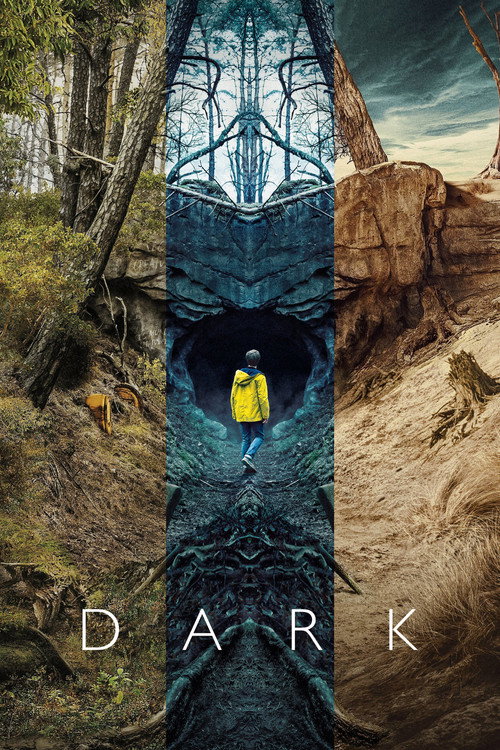
Dark (2017) is the most ambitious time-travel series ever made. Created by Baran bo Odar and Jantje Friese, it runs three seasons and 26 episodes on Netflix, and begins with a missing boy in the small German town of Winden — then expands into a story spanning four families, several timelines and two rival worlds. Louis Hofmann leads the cast, and the show’s commitment to its own logic is extraordinary: every paradox is eventually explained, every loop closes, and the finale lands with genuine emotional weight. If you only watch one time-travel series, make it this one.
The Anime Classic: Steins;Gate
Steins;Gate (2011) proves that time travel does not need a big budget — just a microwave, a phone and a brilliant premise. Across 24 episodes, self-styled mad scientist Okabe discovers that his text messages can be sent into the past, and every small change ripples outward with devastating consequences. Alongside Kurisu, one of anime’s most beloved heroines, he must choose between the people he loves and the timeline he wants. It starts slow and funny, then turns into one of the most tightly plotted thrillers in the medium.
The Blockbuster: Back to the Future
Back to the Future (1985) is the time-travel movie against which all others are measured. Marty McFly’s accidental trip to 1955 — where he must get his own parents together or erase himself from existence — remains a perfect piece of screenwriting: funny, tense and endlessly rewatchable. Its two sequels extend the idea into the future and the Old West, but the original is the essential one, a film that treats the butterfly effect as pure entertainment.
The Gentle Gem: The Girl Who Leapt Through Time
The Girl Who Leapt Through Time (2006) takes the opposite approach. Directed by Mamoru Hosoda and running 1h 38m, it follows Makoto Konno, voiced by Riisa Naka, a schoolgirl who gains the ability to leap backwards through time — and uses it, at first, for gloriously ordinary things: redoing exams, avoiding embarrassment, eating her favourite pudding twice. The film’s genius is showing how even small selfish choices have costs, and its ending is quietly heartbreaking. It streams on HBO Max in the US.
More Loops Worth Your Time
Beyond the four essentials, the genre has plenty more to offer. Looper (2012) casts Joseph Gordon-Levitt as a hitman whose targets arrive from the future — including his own older self, played by Bruce Willis — and turns the paradox into a hard-edged crime story. Edge of Tomorrow (2014) traps Tom Cruise in a single day of alien warfare, repeating it until he learns to survive, while the low-budget Primer (2004) remains the most rigorously logical time-travel film ever made, if you can follow it. Each of these proves the same point: give a storyteller a loop and they will find a new way to break your heart.
Why Time Travel Never Gets Old
Time-travel stories endure because they are really about regret — the universal wish to redo a moment, unsay a word, save a person. The best of them, from Dark’s intricate loops to Steins;Gate’s desperate resets, understand that changing the past always has a price. That is what separates a great time-travel story from a gimmick: not the mechanics of the machine, but the weight of the choice. Start with Dark for the full puzzle, then Steins;Gate for the heartbreak, and finish with Back to the Future for pure joy.
For cast details and where to stream it, see our full Dark guide.
Leave a Reply