⚠ Spoilers ahead
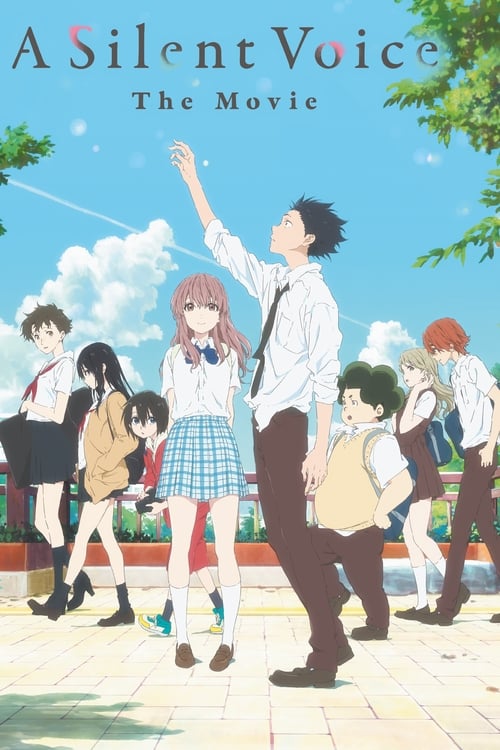
The ending of A Silent Voice does not resolve Shoya Ishida’s story with a grand speech or a perfect apology. It resolves it with a look. For most of the film, Shoya cannot look other people in the face: the film covers the faces of strangers with large X marks, a visual sign of his shame and his fear of being judged. In the final festival scene, those X marks fall away, one by one, and Shoya finally hears the world around him. The ending is not about being forgiven. It is about learning to accept that forgiveness, and other people, are possible.
What the X Marks Mean
Shoya’s X marks begin as self-protection. As a child, he bullied Shouko Nishimiya, a deaf girl who joined his class, and when his classmates turned on him, he became isolated in turn. As a teenager, he carries that guilt everywhere. The X marks are how the film shows his inner life: he looks at the ground, avoids eye contact, and treats every other person as a potential judge. He is not literally unable to see faces; he is unwilling to risk seeing what they think of him.
That is why the X marks are so important to the ending. They are not a magic curse that needs a cure. They are a habit of shame, and habits can only be broken by doing the frightening thing — looking up — again and again. Shoya spends the film trying to make amends, reconnecting with Shouko and with old classmates, and each small act of courage loosens the marks a little more.
Shoya and Shouko
The heart of the film is Shoya’s relationship with Shouko. He cannot undo what he did to her as a child, and the film is honest about that: an apology does not erase bullying, and Shouko’s own pain does not vanish because Shoya feels guilty. Their reconciliation is slow, awkward and incomplete, built on sign language, shared moments and the difficult work of listening.
After a crisis that leaves Shoya in hospital, the balance between them shifts. Shouko, who has blamed herself for the pain she caused others, must learn that she is not a burden; Shoya, who has blamed himself for everything, must learn that punishing himself forever helps no one. The ending works because neither of them is simply healed. They are both still learning, together.
The Festival Scene
The school festival is where all of this comes together. Shoya walks through the festival with his friends, and for the first time, the camera lets us see the crowd as he sees it now: faces without X marks, voices, laughter and music. The sound design opens up, too — where earlier scenes were muffled and closed in, the festival is loud, bright and overwhelming in a good way.
Then Shoya breaks down in tears. It is not a sad cry, exactly, but a release: the moment he realises he is surrounded by people who want him there, and that he no longer has to hide from them. His friends gather around him, not to fix him, but to be with him. That is the film’s answer to its own question. Redemption is not a single act; it is letting other people back in.
Why the Ending Stays With Viewers
A Silent Voice ends without promising that everything will be fine. Shoya and Shouko still have difficult conversations ahead of them, and their friendship is still fragile. But the falling X marks tell us something has changed permanently: Shoya has chosen to look at the world again, and the world, in return, is looking back kindly.
For another anime film about a young person choosing a difficult path, see Weathering With You. For the full story, cast and where to watch, see the complete guide to A Silent Voice on DuloTV.
Leave a Reply