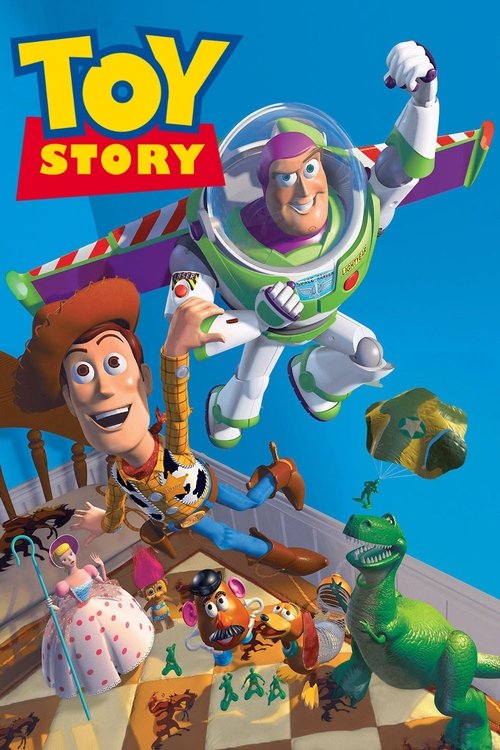
The Pixar movies watch order is release order — the order Pixar actually made the films — and that is the order this guide recommends. But there is a second, famous order worth knowing about: the Pixar Theory, a fan theory that reorders the films into one secret shared timeline. This guide gives you the Pixar movies watch order in release order, walks through the key films, and explains the Pixar Theory order for the curious.
Start at the Beginning: Toy Story
Begin with Toy Story (1995), Pixar’s first feature and the first fully computer-animated film ever made, directed by John Lasseter and starring Tom Hanks as Woody and Tim Allen as Buzz Lightyear. It set the studio’s template: a simple, emotional idea — what do toys do when you leave the room? — told with warmth and wit. From here, the studio’s early run is a near-unbroken streak of classics, and watching them in release order lets you see Pixar’s animation and storytelling grow film by film.
The Golden Run in Release Order
After Toy Story, the release order runs through the films that made Pixar’s name: A Bug’s Life (1998) and Toy Story 2 (1999), then Monsters, Inc. (2001), Finding Nemo (2003), directed by Andrew Stanton and starring Albert Brooks as Marlin and Ellen DeGeneres as Dory, and The Incredibles (2004). Then comes Ratatouille (2007), directed by Brad Bird with Patton Oswalt as Remy, WALL·E (2008), again from Stanton, Up (2009), directed by Pete Docter with Ed Asner as Carl Fredricksen, and Toy Story 3 (2010). Each film stands alone, so you can dip in anywhere — but release order gives you the studio’s evolution, from the toys of 1995 to the silent, wordless opening of WALL·E.
The Later Films
Continue in release order through the 2010s and beyond: Brave (2012), Monsters University (2013), Inside Out (2015), directed by Pete Docter with Amy Poehler as Joy, Coco (2017), directed by Lee Unkrich, and on through the Toy Story sequels, the Incredibles sequel and the studio’s newer films. The later years are more uneven than the golden run, but the highs — Inside Out and Coco especially — are as good as anything Pixar has made, and they reward watching in the order they were released, since each film answers the one before it in technique and ambition. Do not skip the sequels: Finding Dory, Incredibles 2 and Toy Story 4 all deepen characters you already love, and they are best enjoyed in the order Pixar released them.
The Famous Pixar Theory Order
Now the fun part: the Pixar Theory, a fan theory that claims all Pixar films share one universe, in a timeline running from Brave’s ancient magic through the rise of intelligent animals, the age of machines, and finally a post-human Earth where the monsters of Monsters, Inc. are the descendants of humanity. In theory order, you would start with Brave, then move through the films by their place in that secret history rather than their release dates. It is a delightful way to rewatch the films — but it is a theory, not a canon, and it works best as a second viewing, after you already know the films in release order.
The Full Order, Summarized
The Pixar movies watch order is: Toy Story and every film after it in release order, from Finding Nemo to Coco and beyond — with the Pixar Theory order saved for a playful rewatch. For a deeper dive into the studio’s first great creation, the Toy Story watch order is the natural next stop. Start tonight with the original and you will see why Pixar became the most trusted name in animation.
Leave a Reply