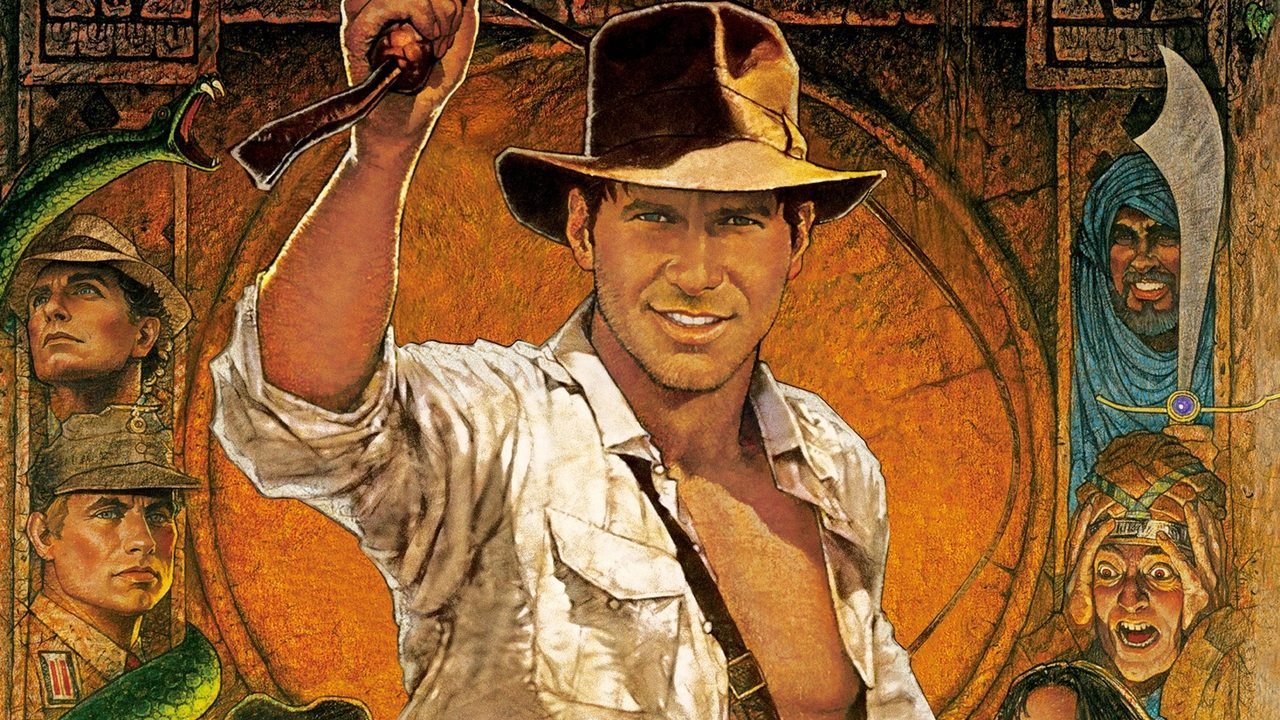
The Indiana Jones watch order is refreshingly simple: watch the five films in release order, and you will follow Indy’s life the way audiences did — from the dusty thrill of the first adventure to the weathered hero of the last. There is one prequel wrinkle and one television footnote to know about, but neither should change your plan. This guide gives you the Indiana Jones watch order, explains where the prequel sits, and covers the Young Indy series for completists.
Start With Raiders
Begin with Raiders of the Lost Ark (1981), directed by Steven Spielberg and starring Harrison Ford as Dr. Indiana Jones, Karen Allen as Marion Ravenwood, Paul Freeman as Dr. René Belloq and John Rhys-Davies as Sallah. Set in 1936, it sends Indy racing the Nazis to the Ark of the Covenant, and it remains the adventure film by which all others are judged: the boulder, the Cairo streets, the truck chase and the Ark’s terrifying opening are the series’ foundation. Every later film is measured against Raiders, so start here, and start at the beginning.
The Sequels in Order
Next comes Indiana Jones and the Temple of Doom (1984), which is technically a prequel — it is set in 1935, a year before Raiders — but watch it second anyway. Release order is the intended experience: the film’s darker, more frantic tone works as a contrast to Raiders, and its story stands alone, with Indy, Willie Scott and Short Round chasing the Sankara Stones in India. Then watch Indiana Jones and the Last Crusade (1989), in which Sean Connery joins as Indy’s father, Henry Jones Sr., and the father-son dynamic gives the series its warmest, funniest film. Follow that with Indiana Jones and the Kingdom of the Crystal Skull (2008), which brings Indy into the 1950s and introduces his son Mutt, and finish with Indiana Jones and the Dial of Destiny (2023), in which an older Indy, joined by his goddaughter Helena, chases the Archimedes Dial for one last adventure.
Why Release Order Works
Release order works because each film was made for an audience that had seen the ones before it. The jokes, the callbacks and the aging of Indy himself all land in the order they were released, and the one chronological wrinkle — Temple of Doom’s 1935 setting — changes nothing about the story, since the films are self-contained adventures rather than chapters of one plot. Chronological order would only swap the second film to the front and spoil nothing, but it would also break the rhythm the filmmakers built. Trust the order the series was made in.
The Young Indy Footnote
Completists should know about The Young Indiana Jones Chronicles, a television series that aired in the early 1990s and follows Indy as a boy and young man on adventures around the world, meeting historical figures along the way. It is charming, educational and entirely optional: it does not set up anything in the films, and the films do not depend on it. Watch it after the five films if you want more Indy, and treat it as a bonus chapter rather than a step in the order. The same goes for the various novels, comics and games — enjoyable extras, not required reading.
The Full Order, Summarized
The complete Indiana Jones watch order is: Raiders of the Lost Ark, Indiana Jones and the Temple of Doom, Indiana Jones and the Last Crusade, Indiana Jones and the Kingdom of the Crystal Skull, and Indiana Jones and the Dial of Destiny — in that order, with The Young Indiana Jones Chronicles as an optional extra at the end. Keep it simple, keep it in release order, and let the fedora do the rest. For another hero whose adventures are best watched in the order they were released, Back to the Future follows the same satisfying rule.
Leave a Reply