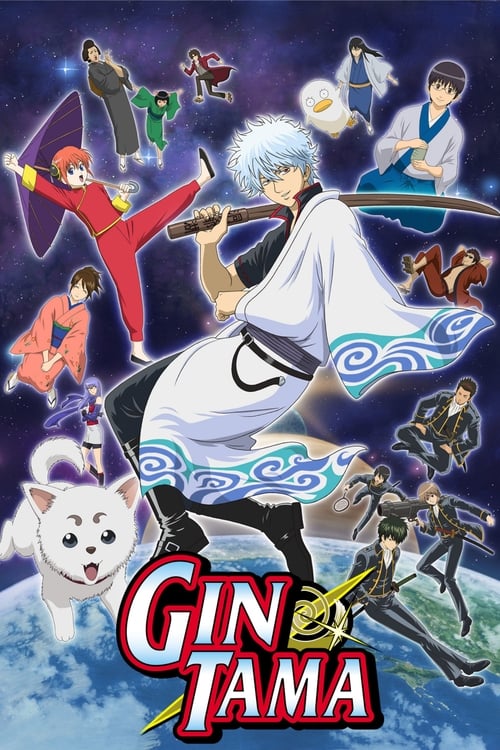
Gintama is a 367-episode comedy epic, and its watch order is refreshingly simple: there is one story, told in order, with no timelines to untangle and no reboots to reconcile. The real question is not what order to watch it in, but how much of it you need to watch — because Gintama mixes brilliant comedy filler with serious arcs that are among the best in anime. This guide gives you the complete Gintama watch order, including what you can skip and where the final movie belongs.
The Core Order: One Long Run, in Broadcast Order
Start with Gintama, the 2006 series that follows Gintoki Sakata, Kagura and Shinpachi as they run an odd-jobs business in an Edo-era Japan invaded by aliens. The first season premiered in April 2006 with 49 episodes, and the series continued across 11 seasons and 367 episodes in total. Watch it in broadcast order, season by season, and the story unfolds as intended: the early episodes are mostly comedy, the serious arcs grow longer and more consequential as the series goes on, and the characters you laughed with for hundreds of episodes become the ones you fear for in the finale. There is no alternate order and no season to watch out of sequence.
The Filler Question: What Can You Skip?
Gintama’s comedy episodes are its signature, but they are also the reason many viewers stall: the series is famous for parody episodes, joke arcs and self-aware filler that breaks the fourth wall. The honest answer is that the comedy is the show — skip all of it and you lose the characters — but you do not need every joke episode to follow the story. The serious arcs, which retell the characters’ pasts and build toward the final war, are essential and unmissable. A practical approach: watch the comedy episodes until you know the cast and love them, then use a filler guide to skip the purely standalone joke episodes when you want to push toward the serious arcs. Skipping filler never breaks the story, because Gintama’s plot lives in its serious arcs, not its jokes.
The Movies: Where They Fit
Gintama has two films that matter for the watch order. The first film, a retelling of an early serious arc, is a recap you can safely skip if you have watched the series. The second is the one that counts: Gintama: The Final, the 2021 film directed by Chizuru Miyawaki that serves as the series’ farewell and its true ending. The Final adapts the manga’s climax and closes the story of Gintoki and his friends for good. Watch it last, after all 367 episodes — or after the serious arcs, if you took the filler-skipping path. Watching it earlier would spoil the entire final war and rob the ending of the weight that hundreds of episodes built.
The Short Path, If 367 Episodes Is Too Many
If the full run feels impossible, Gintama still works on a shortened path: watch the first season to meet the cast, then follow the serious arcs in order, using episode guides to identify them, and finish with The Final. You will miss some of the comedy that makes the characters beloved, but you will get the complete story — the pasts of Gintoki, Takasugi and Katsura, the war that shaped them, and the finale that resolves it. This is a compromise, not the ideal, and most fans will tell you the comedy is worth the time. But a shortened Gintama is far better than no Gintama, and the serious arcs alone are among the strongest long-form storytelling in anime.
The Full Order, Summarized
The complete Gintama watch order is: Gintama in broadcast order, all 367 episodes or the serious-arc path if you are short on time, and then Gintama: The Final as the true ending. That is the whole journey, from the odd-jobs office to the final battle, with no detours and no alternate versions. Start at the beginning, laugh your way through the comedy, take the serious arcs seriously, and save the final film for last — it earns its title.
Leave a Reply