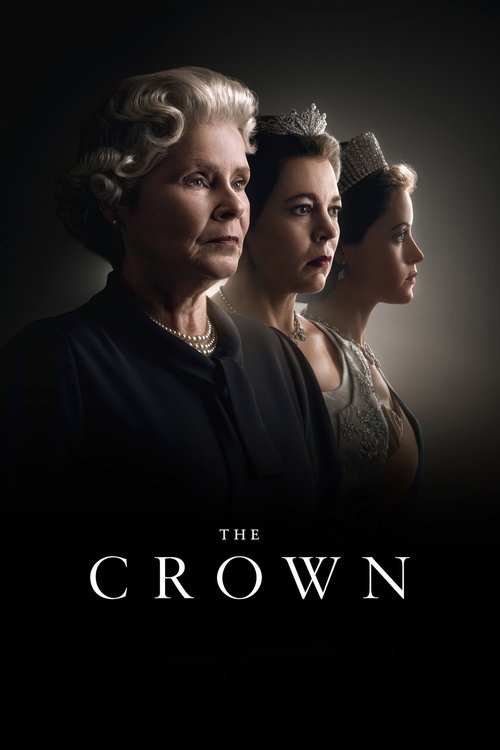
the crown true story fact check starts with the honest label Netflix itself eventually added: a fictional dramatisation inspired by real events. The Crown, created by Peter Morgan, covers Queen Elizabeth II’s reign from her 1952 accession to the 2000s across six seasons — but the private conversations are invented, timelines are compressed, and some scenes are pure drama. Here is what each season gets right, and where it bends the truth.
Seasons 1 and 2: The Young Queen and the Suez Crisis
Claire Foy plays Elizabeth in the first two seasons, and the broad frame is solid: Elizabeth becomes queen at 25 after her father’s death in 1952, is crowned in 1953, and learns to work with Winston Churchill, who really was her first prime minister. The Great Smog of December 1952, which killed thousands in London, really happened, and the show’s fog episode captures its eerie horror. Where it bends: the show compresses years into episodes, and Philip’s frustrations and rumored infidelities are dramatized from gossip rather than documented fact. The marriage strain feels real because the couple’s early years were genuinely difficult, but the specific arguments are Morgan’s invention.
Season 3: Aberfan and a New Cast
Olivia Colman takes over as Elizabeth in season 3, which covers the 1960s and 1970s. Its most powerful episode, about Aberfan, is built on a real tragedy: in October 1966, a coal waste tip collapsed onto a Welsh village school, killing 116 children and 28 adults. The Queen did delay her visit, and later said it was one of her greatest regrets — the show’s portrait of that delay is broadly accurate. The season also covers Harold Wilson’s premiership and Princess Margaret’s restlessness. Again, the public events are real; the private scenes, including Margaret’s marriage troubles played out in dialogue, are dramatized.
Season 4: Thatcher, Diana and the Balmoral Test
Season 4 brings in Margaret Thatcher (Gillian Anderson) and Diana Spencer (Emma Corrin). The politics are real: Thatcher really was prime minister from 1979, and her frosty relationship with the Queen is well documented, though their private audiences are imagined. Charles and Diana’s unhappy marriage, and Diana’s eating disorder, are also matters of public record — Diana spoke about them herself. The famous Balmoral test, in which Thatcher is judged on her country-house manners, is largely invented as a set piece: a fun episode, but not a documented ritual. Treat it as a parable about class, not a transcript.
Season 5: Annus Horribilis and the Panorama Interview
Imelda Staunton’s seasons cover the 1990s, the decade the Queen herself called her annus horribilis in 1992 — the year of the Windsor Castle fire and three royal separations. That speech is real, and so is the broad arc: the Charles and Diana media war, the leaked Camillagate phone call of 1993, and Diana’s 1995 Panorama interview, in which she said there were three of us in this marriage. The show’s invention lies in the framing: it imagines private strategy sessions and motivations that no one can verify, and it compresses events so that storylines land in the same episode.
Season 6: Diana’s Final Summer and the Ghosts
The final season covers Diana’s death in Paris in August 1997, which is handled with restraint and sticks to the known facts: the car crash in the Pont de l’Alma tunnel, the paparazzi pursuit, and the national outpouring of grief. Mohamed Al Fayed’s claims about a conspiracy are presented as his beliefs, not established fact — and no official inquiry has supported them. The season’s most controversial invention is the Queen and Charles talking to Diana’s ghost: pure dramatisation, and a clear sign of where the show stops being history. The later episodes, including William meeting Kate at St Andrews and Charles marrying Camilla in 2005, return to documented ground.
The Bottom Line
So how much of The Crown is true? The spine is real — the accessions, crises, speeches and deaths all happened — but the heart of the show, the private conversations, is fiction. Morgan has always said the series imagines what happened behind closed doors, and Netflix now labels it a fictional dramatisation. Watch it as a beautifully made what-if-it-felt-like-this version of history, then check the record: the real story, from Aberfan to the Panorama interview, is dramatic enough on its own. If you like fact-checking your dramas, our Chernobyl guide does the same job for HBO’s miniseries.
Ready to watch it with fresh eyes? Start with The Crown on Netflix and keep this fact check beside you.
Leave a Reply