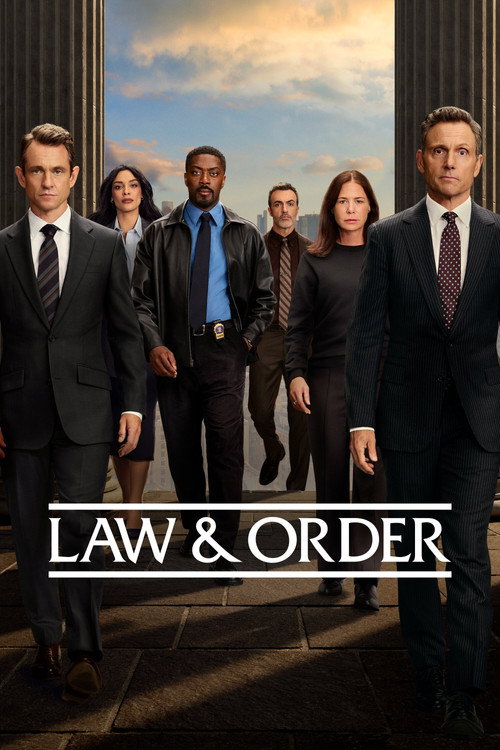
The Law & Order watch order is forgiving, because the franchise is built on standalone cases: you can start almost anywhere, but the best route is still the original first, then SVU. Law & Order (1990), created by Dick Wolf, ran for 26 seasons and 549 episodes, and its famous two-part structure follows a crime from the police investigation to the courtroom trial. That format made it one of television’s longest-running dramas, and it spawned the franchise’s biggest success, Special Victims Unit.
Start With the Original Series
Begin with the original Law & Order, whose early seasons set the template: detectives investigate, prosecutors argue, and the episode ends with a verdict or a moral question rather than a neat resolution. Sam Waterston’s Jack McCoy and Jerry Orbach’s Lennie Briscoe anchor the show’s middle years, and the cast rotates over time without breaking the format. Because most episodes are self-contained, you do not need to watch all 549 episodes in order: pick a run of seasons, get used to the rhythm, and move on when you are ready.
Then Add SVU
Law & Order: Special Victims Unit (1999) is the franchise’s longest-running spin-off, with 28 seasons and 602 episodes. It follows the NYPD’s Special Victims Unit, which investigates sexually based crimes, and it is anchored by Mariska Hargitay’s Olivia Benson, who grows from detective to captain across the run, with Ice-T’s Fin Tutuola as her long-serving partner. SVU shares the original’s case-of-the-week structure but leans harder into character arcs, so watching it in season order pays off more than it does for the original.
The Crossovers and Organized Crime
The two shows cross over regularly: detectives from one series appear in the other’s cases, and major events play out across both. Christopher Meloni’s Elliot Stabler, Benson’s original partner, left SVU and later returned in crossovers and in his own spin-off, Law & Order: Organized Crime, which deepened the shared universe further. For crossover episodes, watch the parts in airdate order, starting with whichever show launches the story. The franchise also includes shorter-lived spin-offs such as Criminal Intent and Trial by Jury, but those are optional: the original and SVU are the core.
The Full Order, Summarized
The Law & Order watch order is: the original series first (in any season order that suits you), then SVU in season order, with crossover episodes watched in airdate order and Organized Crime added alongside SVU once Stabler returns. If you like shared-universe TV with a clear viewing path, the One Chicago watch order works the same way: shows in launch order, crossovers in airdate order. For the full cast, seasons and streaming details, see the Law & Order page.
Where New Viewers Should Start
If the sheer size of the franchise feels daunting, start small. Watch a handful of episodes from the original’s middle years to learn the format, then begin SVU from season 1 and follow Benson’s career from the start. That path gives you the franchise’s two anchors without demanding a thousand episodes up front, and you can dip into the original’s earlier or later seasons whenever curiosity strikes. The franchise’s greatest strength is that it never really requires homework: every episode explains its own case, and the long character arcs reward you only when you choose to follow them. The crossovers, meanwhile, are the connective tissue that turns two great shows into one shared world, and watching them in airdate order keeps every return and reunion in its proper place. For the full cast, seasons and streaming details, see the Law & Order page.
However you approach it, the franchise’s formula has lasted for a reason: a compelling case, a sharp courtroom turn, and characters you come to trust. Start with the original, follow Benson through SVU, and let the crossovers surprise you along the way.
Leave a Reply